Best Vertical Crops for Humid Subtropical Climates
Vertical crops suited to warm, humid growing seasons.
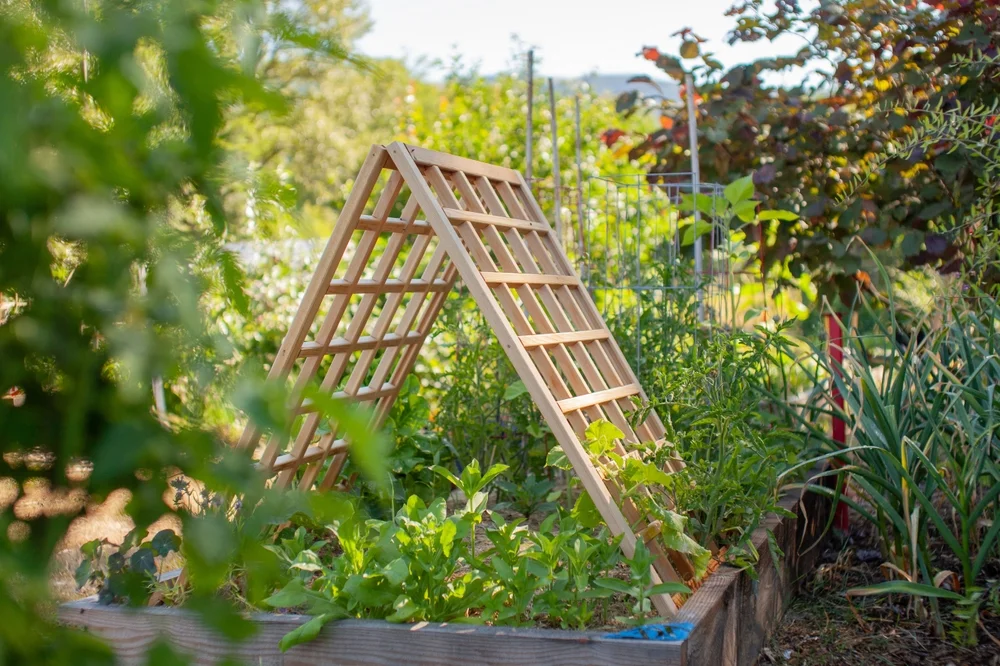
Humid subtropical gardens can support an impressive range of climbing vegetables, leafy vines and perennial fruiting crops. Long warm seasons encourage rapid growth, but high humidity, heavy rain and intense summer heat can also increase disease pressure and make drainage especially important.
The crops in this guide are rated as recommended for humid subtropical conditions. They generally cope well with warm nights and summer humidity when grown in freely draining soil with good airflow and a support strong enough for their mature size.
Use the comparison below to find crops that suit your available space, container size and trellis strength. Some are quick annual vegetables, while others (such as choko and passionfruit) need a permanent structure and a longer-term position.
Compare at a glance
| Crop | Climate suitability | Days to harvest | Containers | Support strength | Spacing | Lifecycle |
|---|---|---|---|---|---|---|
| Malabar Spinach | Recommended | 60–85 days | Recommended | Medium | 30 cm | Perennial |
| Yardlong Bean / Snake Bean | Recommended | 50–80 days | Recommended | Medium | 20 cm | Annual |
| Bitter Melon / Bitter Gourd | Recommended | 50–80 days | Specialist | Heavy | 1.20 m | Annual |
| Chayote / Choko (Trellised) | Recommended | 120–180 days | Specialist | Extra Heavy | 3 m | Perennial |
| Luffa / Loofah (Trellised) | Recommended | 60–180 days | Specialist | Extra Heavy | 90 cm | Annual |
| Armenian Cucumber / Snake Melon | Recommended | 60–75 days | Recommended | Medium | 45 cm | Annual |
| Bottle Gourd / Cucuzza / New Guinea Bean (Trellised) | Recommended | 60–120 days | Specialist | Extra Heavy | 1.20 m | Annual |
| Caigua / Achocha (Trellised) | Recommended | 100–140 days | Specialist | Heavy | 1 m | Annual |
| Chilacayote / Fig-Leaf Gourd / Shark Fin Melon (Trellised) | Recommended | 100–160 days | Specialist | Extra Heavy | 2 m | Annual |
| Climbing Lima Bean / Butter Bean / Madagascar Bean | Recommended | 85–120 days | Specialist | Heavy | 30 cm | Perennial |
| Cucamelon / Mouse Melon | Recommended | 60–75 days | Recommended | Medium | 45 cm | Perennial |
| Hyacinth Bean / Lablab Bean | Recommended | 75–150 days | Specialist | Heavy | 45 cm | Perennial |
| Kiwano / African Horned Cucumber | Recommended | 100–120 days | Specialist | Medium | 1 m | Annual |
| Passionfruit (Trellised) | Recommended | 180–365 days | Specialist | Heavy | 3 m | Perennial |
| Rice Bean | Recommended | 90–150 days | Specialist | Medium | 45 cm | Annual |
| Snake Gourd (Trellised) | Recommended | 60–100 days | Specialist | Heavy | 1.20 m | Annual |
| Tromboncino / Climbing Summer Squash | Recommended | 58–80 days | Specialist | Extra Heavy | 75 cm | Annual |
| Wax Gourd / Winter Melon / Fuzzy Melon (Trellised) | Recommended | 70–150 days | Specialist | Extra Heavy | 1.20 m | Annual |
| Winged Bean | Recommended | 90–150 days | Specialist | Heavy | 30 cm | Perennial |
- Malabar Spinach
- Climate suitability
- Recommended
- Days to harvest
- 60–85 days
- Containers
- Recommended
- Support strength
- Medium
- Spacing
- 30 cm
- Lifecycle
- Perennial
- Yardlong Bean / Snake Bean
- Climate suitability
- Recommended
- Days to harvest
- 50–80 days
- Containers
- Recommended
- Support strength
- Medium
- Spacing
- 20 cm
- Lifecycle
- Annual
- Bitter Melon / Bitter Gourd
- Climate suitability
- Recommended
- Days to harvest
- 50–80 days
- Containers
- Specialist
- Support strength
- Heavy
- Spacing
- 1.20 m
- Lifecycle
- Annual
- Chayote / Choko (Trellised)
- Climate suitability
- Recommended
- Days to harvest
- 120–180 days
- Containers
- Specialist
- Support strength
- Extra Heavy
- Spacing
- 3 m
- Lifecycle
- Perennial
- Luffa / Loofah (Trellised)
- Climate suitability
- Recommended
- Days to harvest
- 60–180 days
- Containers
- Specialist
- Support strength
- Extra Heavy
- Spacing
- 90 cm
- Lifecycle
- Annual
- Armenian Cucumber / Snake Melon
- Climate suitability
- Recommended
- Days to harvest
- 60–75 days
- Containers
- Recommended
- Support strength
- Medium
- Spacing
- 45 cm
- Lifecycle
- Annual
- Bottle Gourd / Cucuzza / New Guinea Bean (Trellised)
- Climate suitability
- Recommended
- Days to harvest
- 60–120 days
- Containers
- Specialist
- Support strength
- Extra Heavy
- Spacing
- 1.20 m
- Lifecycle
- Annual
- Caigua / Achocha (Trellised)
- Climate suitability
- Recommended
- Days to harvest
- 100–140 days
- Containers
- Specialist
- Support strength
- Heavy
- Spacing
- 1 m
- Lifecycle
- Annual
- Chilacayote / Fig-Leaf Gourd / Shark Fin Melon (Trellised)
- Climate suitability
- Recommended
- Days to harvest
- 100–160 days
- Containers
- Specialist
- Support strength
- Extra Heavy
- Spacing
- 2 m
- Lifecycle
- Annual
- Climbing Lima Bean / Butter Bean / Madagascar Bean
- Climate suitability
- Recommended
- Days to harvest
- 85–120 days
- Containers
- Specialist
- Support strength
- Heavy
- Spacing
- 30 cm
- Lifecycle
- Perennial
- Cucamelon / Mouse Melon
- Climate suitability
- Recommended
- Days to harvest
- 60–75 days
- Containers
- Recommended
- Support strength
- Medium
- Spacing
- 45 cm
- Lifecycle
- Perennial
- Hyacinth Bean / Lablab Bean
- Climate suitability
- Recommended
- Days to harvest
- 75–150 days
- Containers
- Specialist
- Support strength
- Heavy
- Spacing
- 45 cm
- Lifecycle
- Perennial
- Kiwano / African Horned Cucumber
- Climate suitability
- Recommended
- Days to harvest
- 100–120 days
- Containers
- Specialist
- Support strength
- Medium
- Spacing
- 1 m
- Lifecycle
- Annual
- Passionfruit (Trellised)
- Climate suitability
- Recommended
- Days to harvest
- 180–365 days
- Containers
- Specialist
- Support strength
- Heavy
- Spacing
- 3 m
- Lifecycle
- Perennial
- Rice Bean
- Climate suitability
- Recommended
- Days to harvest
- 90–150 days
- Containers
- Specialist
- Support strength
- Medium
- Spacing
- 45 cm
- Lifecycle
- Annual
- Snake Gourd (Trellised)
- Climate suitability
- Recommended
- Days to harvest
- 60–100 days
- Containers
- Specialist
- Support strength
- Heavy
- Spacing
- 1.20 m
- Lifecycle
- Annual
- Tromboncino / Climbing Summer Squash
- Climate suitability
- Recommended
- Days to harvest
- 58–80 days
- Containers
- Specialist
- Support strength
- Extra Heavy
- Spacing
- 75 cm
- Lifecycle
- Annual
- Wax Gourd / Winter Melon / Fuzzy Melon (Trellised)
- Climate suitability
- Recommended
- Days to harvest
- 70–150 days
- Containers
- Specialist
- Support strength
- Extra Heavy
- Spacing
- 1.20 m
- Lifecycle
- Annual
- Winged Bean
- Climate suitability
- Recommended
- Days to harvest
- 90–150 days
- Containers
- Specialist
- Support strength
- Heavy
- Spacing
- 30 cm
- Lifecycle
- Perennial
Crops in this guide
19 crops matched from the live crop library.
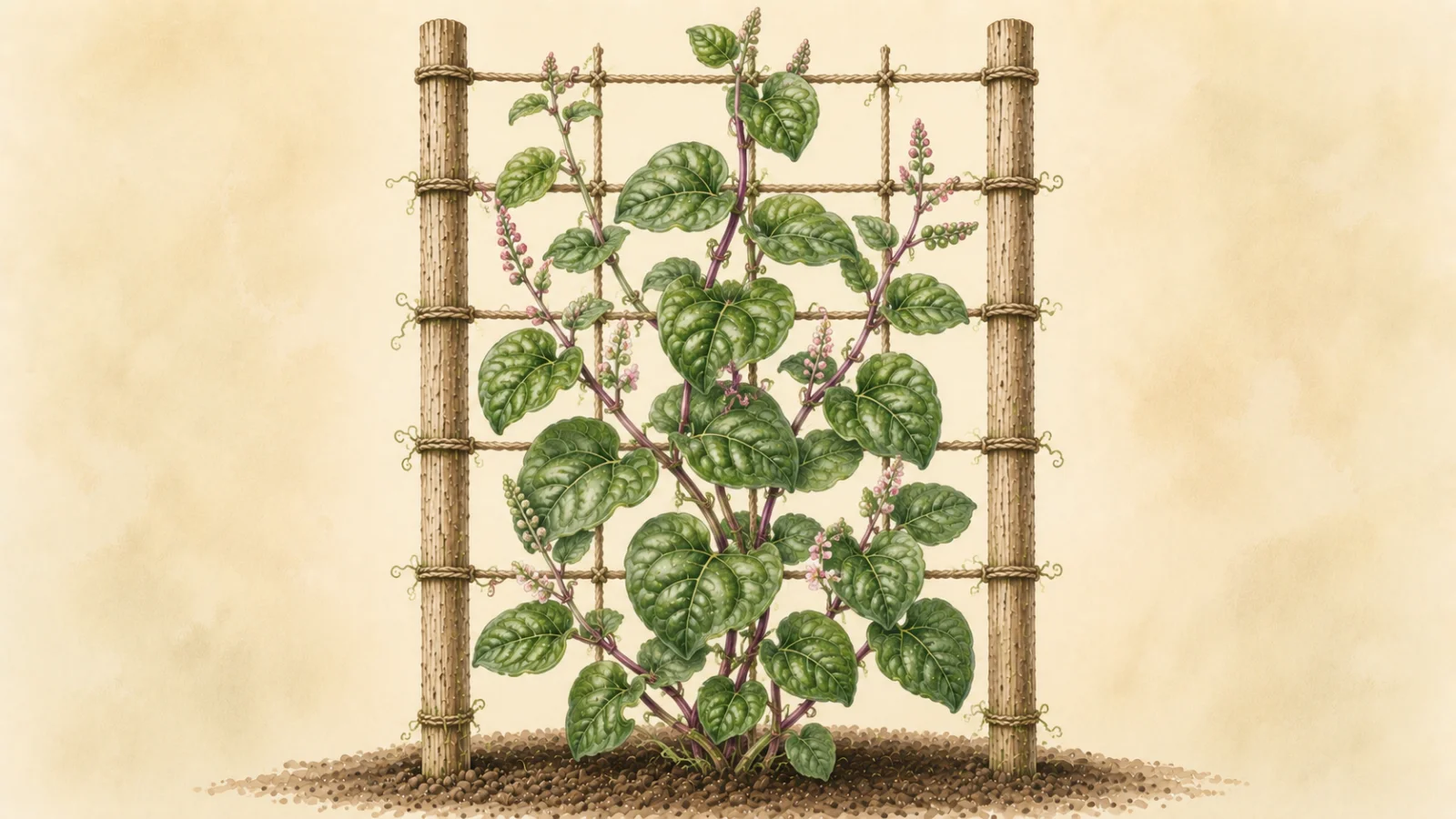
Malabar Spinach
Basella alba
Suitability for this climate: Recommended
This profile covers edible Malabar spinach grown vertically for its leaves and tender shoot tips. It includes green-stemmed Basella alba and red-stemmed forms commonly sold as Basella rubra, Red Malabar or Rubra. Malabar spinach is not true spinach. It does not cover New Zealand spinach, Okinawa spinach, longevity spinach, water spinach or ordinary cool-season spinach.
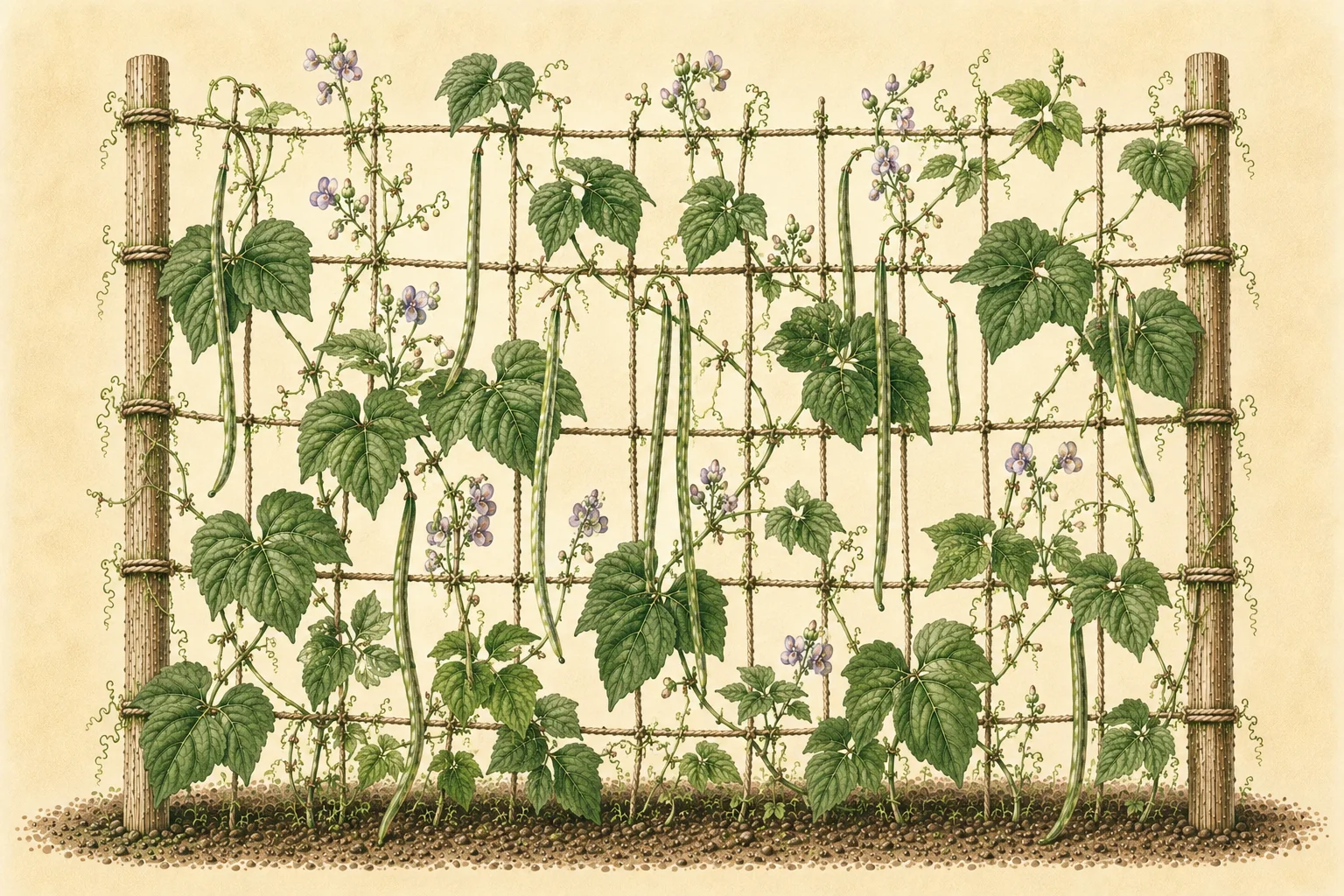
Yardlong Bean / Snake Bean
Vigna unguiculata subsp. sesquipedalis
Suitability for this climate: Recommended
This profile covers climbing cultivars of Vigna unguiculata subsp. sesquipedalis grown vertically for their tender immature pods. These beans are also commonly called snake beans, asparagus beans, Chinese long beans and long-podded cowpeas. It does not cover bush or dwarf yardlong-bean cultivars, ordinary pole snap beans, shelling cowpeas or other climbing bean species. Follow cultivar-specific guidance where pod length, maturity or day-length response differs. It does not cover ordinary common pole beans, bush cowpeas, black-eyed peas, winged beans, hyacinth beans or dwarf yardlong cultivars that do not require a full trellis. Pod length, colour and ideal harvest size vary considerably between cultivars.
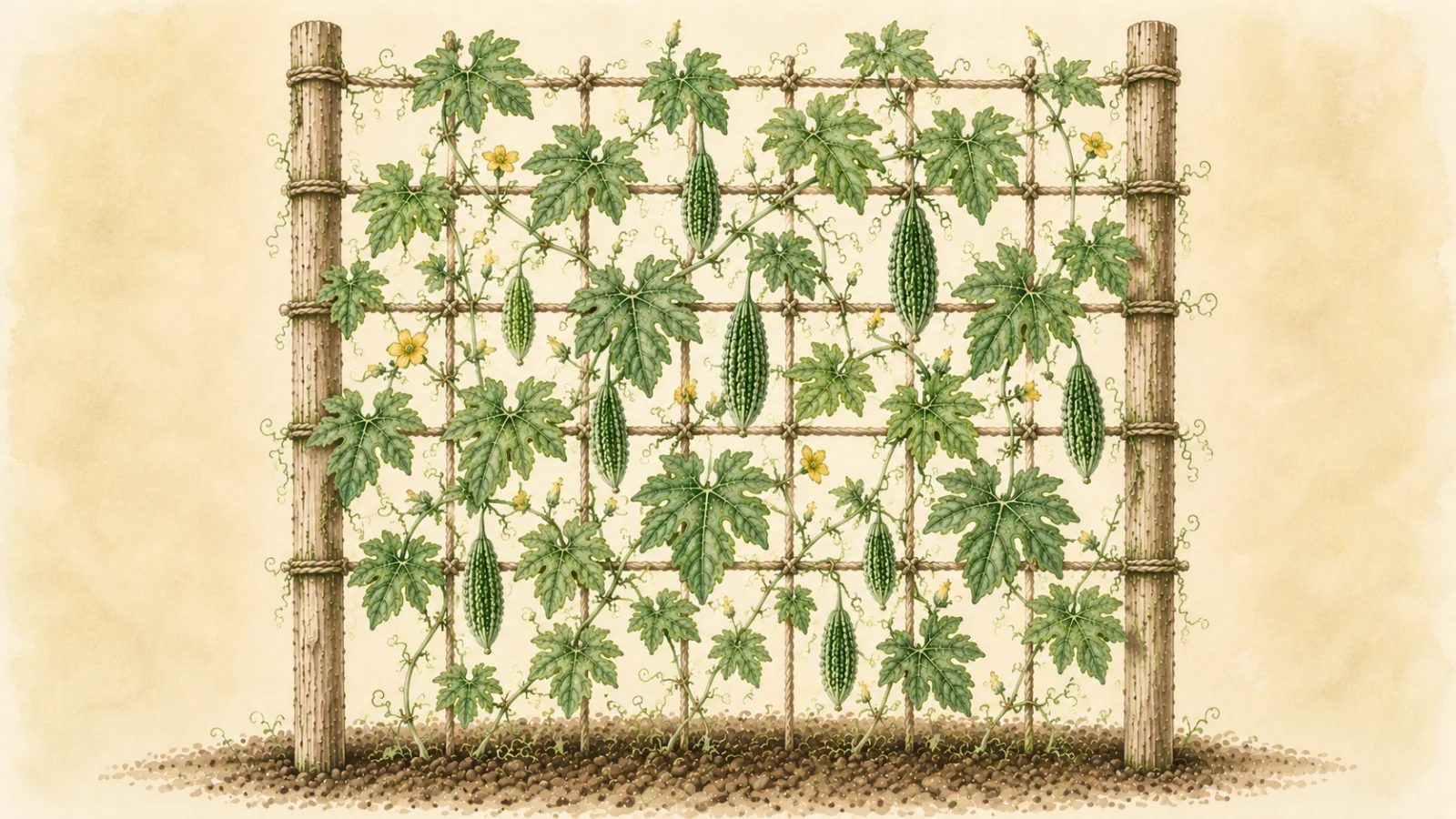
Bitter Melon / Bitter Gourd
Momordica charantia
Suitability for this climate: Recommended
This profile covers cultivated Chinese-type and Indian-type bitter melon grown vertically for its immature edible fruit. It does not cover wild or weedy balsam-pear forms, ornamental Momordica species or ripe fruit grown primarily for seed. Bitter melon may escape cultivation and self-seed in warm climates, so prevent ripe fruit from splitting where spreading is a concern.
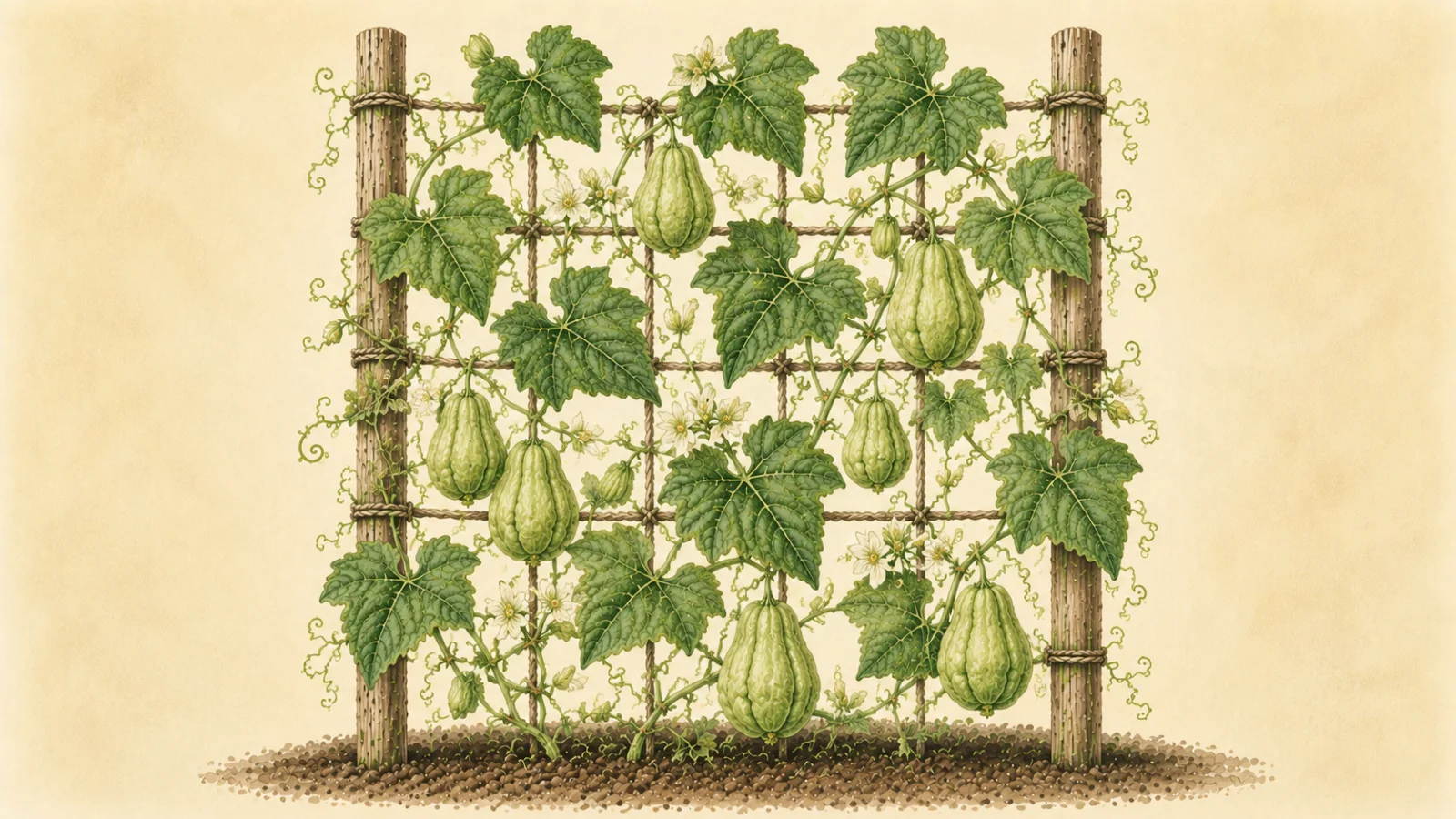
Chayote / Choko (Trellised)
Sechium edule
Suitability for this climate: Recommended
This profile covers cultivated chayote, known as choko in Australia, grown vertically for its edible fruit. It includes smooth, wrinkled and spiny green or pale-fruited forms of Sechium edule. Chayote is a tropical or subtropical perennial and may remain productive for several years in a suitable frost-free climate. In colder areas it may be grown as a long-season annual, although fruit production is often unreliable because flowering is stimulated by short days. This profile focuses on fruit production. Young shoots, leaves, tuberous roots and the single soft seed are also eaten in some cuisines, but they have different harvesting and preparation requirements. It does not cover other pear-shaped gourds or unrelated crops also called vegetable pear.
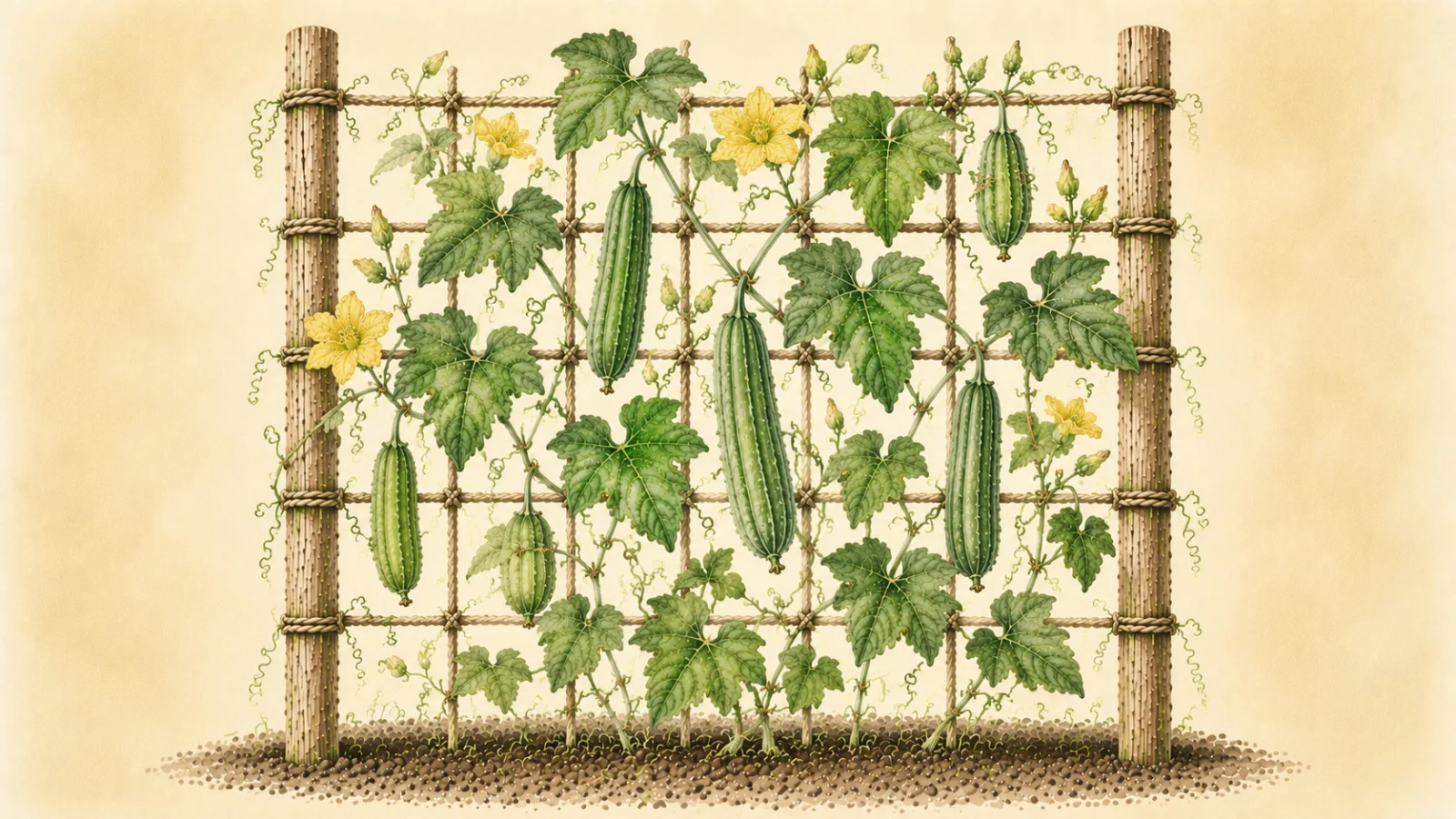
Luffa / Loofah (Trellised)
Luffa spp.
Suitability for this climate: Recommended
This profile covers smooth luffa and angled or ridged luffa grown vertically. Young tender fruit may be harvested as a vegetable, while fully mature dry fruit may be processed into natural sponges. It includes Luffa aegyptiaca, which is also widely listed under the synonym Luffa cylindrica, and Luffa acutangula. It does not cover ball luffa, Luffa operculata, bottle gourds, snake gourds or other ornamental and hard-shelled gourds. Only young, tender luffa fruit is used as a vegetable; fully mature fibrous fruit is not edible.
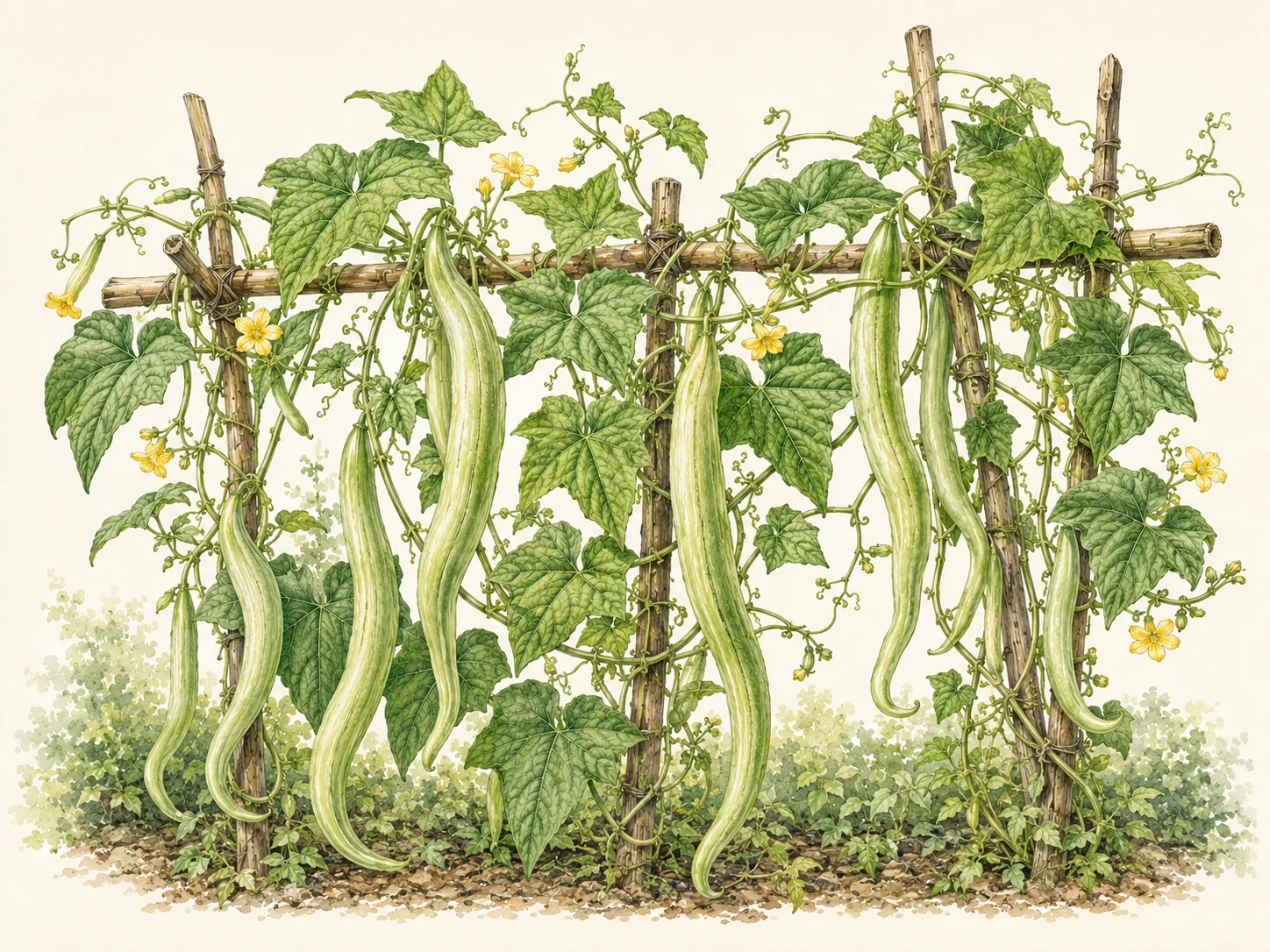
Armenian Cucumber / Snake Melon
Cucumis melo var. flexuosus
Suitability for this climate: Recommended
This profile covers Armenian cucumber and snake-melon cultivars grown vertically and harvested while immature as crisp, mild cucumber-like fruit. Despite the common name, Armenian cucumber is botanically a melon in the Flexuosus group of Cucumis melo rather than a true cucumber, Cucumis sativus. It includes pale green, dark green and striped long-fruited cultivars. It does not cover snake gourd, ordinary cucumber, mature sweet muskmelon, bitter melon or yardlong bean. Fruit is intended for immature harvest before the rind, flesh and seeds harden.
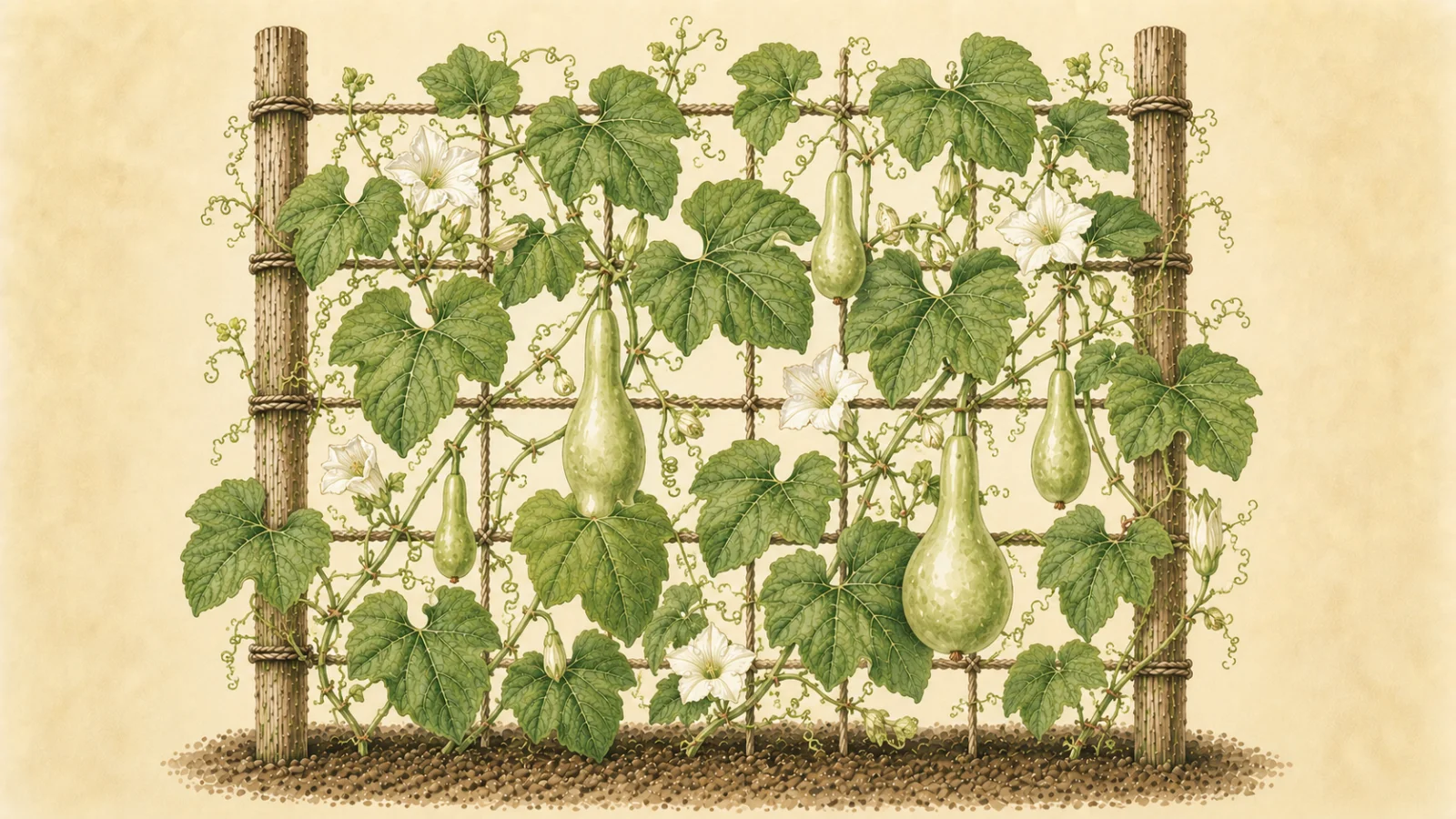
Bottle Gourd / Cucuzza / New Guinea Bean (Trellised)
Lagenaria siceraria
Suitability for this climate: Recommended
This profile covers edible forms of Lagenaria siceraria grown vertically, including cucuzza, New Guinea bean, opo squash, long gourd, calabash and bottle-gourd types. Young tender fruit is harvested as a vegetable. Fully mature fruit becomes hard and fibrous and may be dried for craft or container use, but it is no longer eaten as a vegetable. It does not cover luffa, snake gourd, wax gourd, ornamental Cucurbita gourds or wild bitter gourds. New Guinea bean is not a true bean; it is an edible bottle gourd.
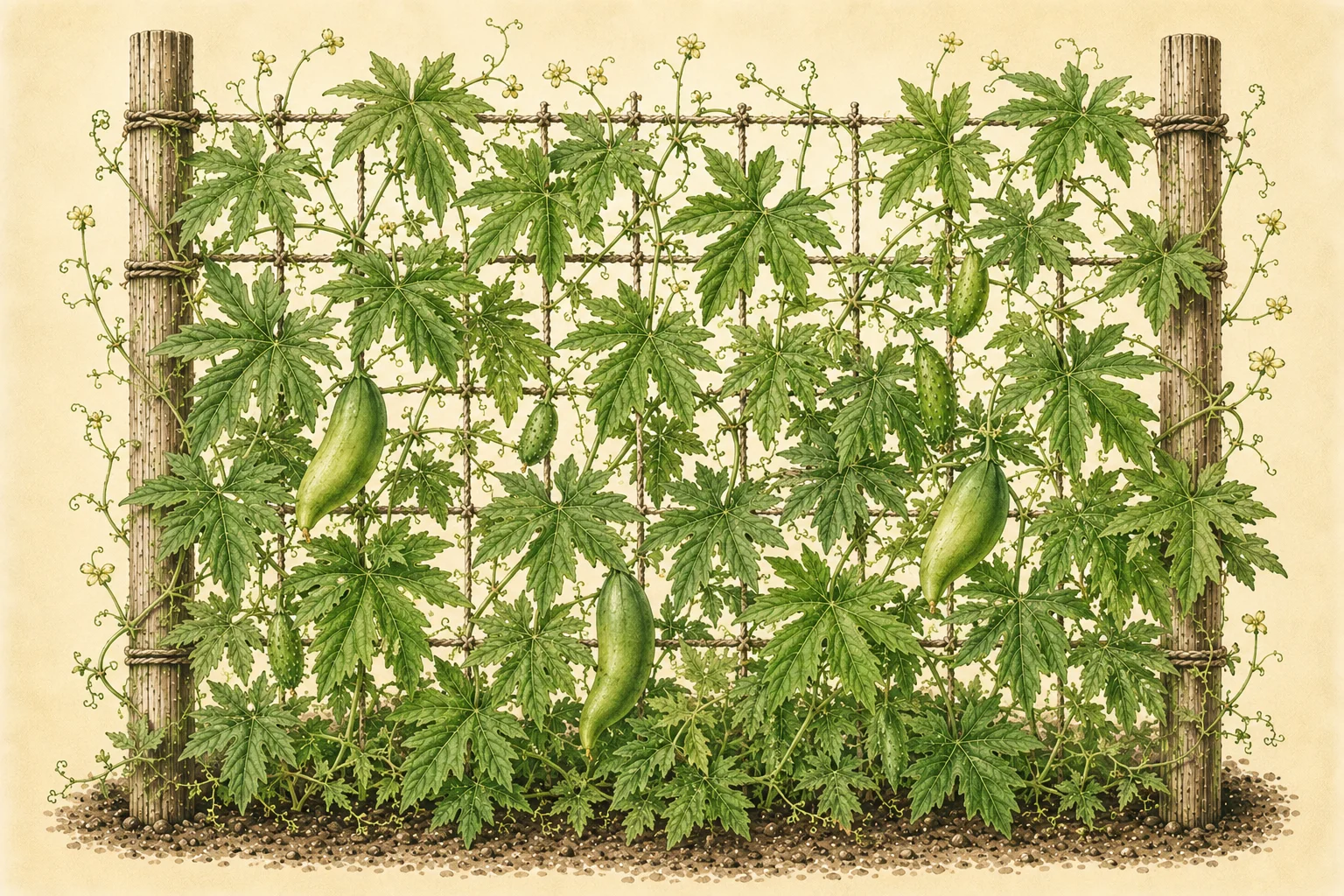
Caigua / Achocha (Trellised)
Cyclanthera pedata
Suitability for this climate: Recommended
This profile covers Cyclanthera pedata grown vertically for its edible fruit, commonly called caigua, achocha, stuffing cucumber or slipper gourd. Young fruit may be eaten whole while still tender. Larger mature-green fruit develops a hollow centre and is commonly opened, deseeded and stuffed or sliced for cooking. It does not cover the smaller explosive cucumber Cyclanthera brachystachya, ordinary cucumbers, luffa or other South American cucurbits. Caigua is normally grown as an annual crop.
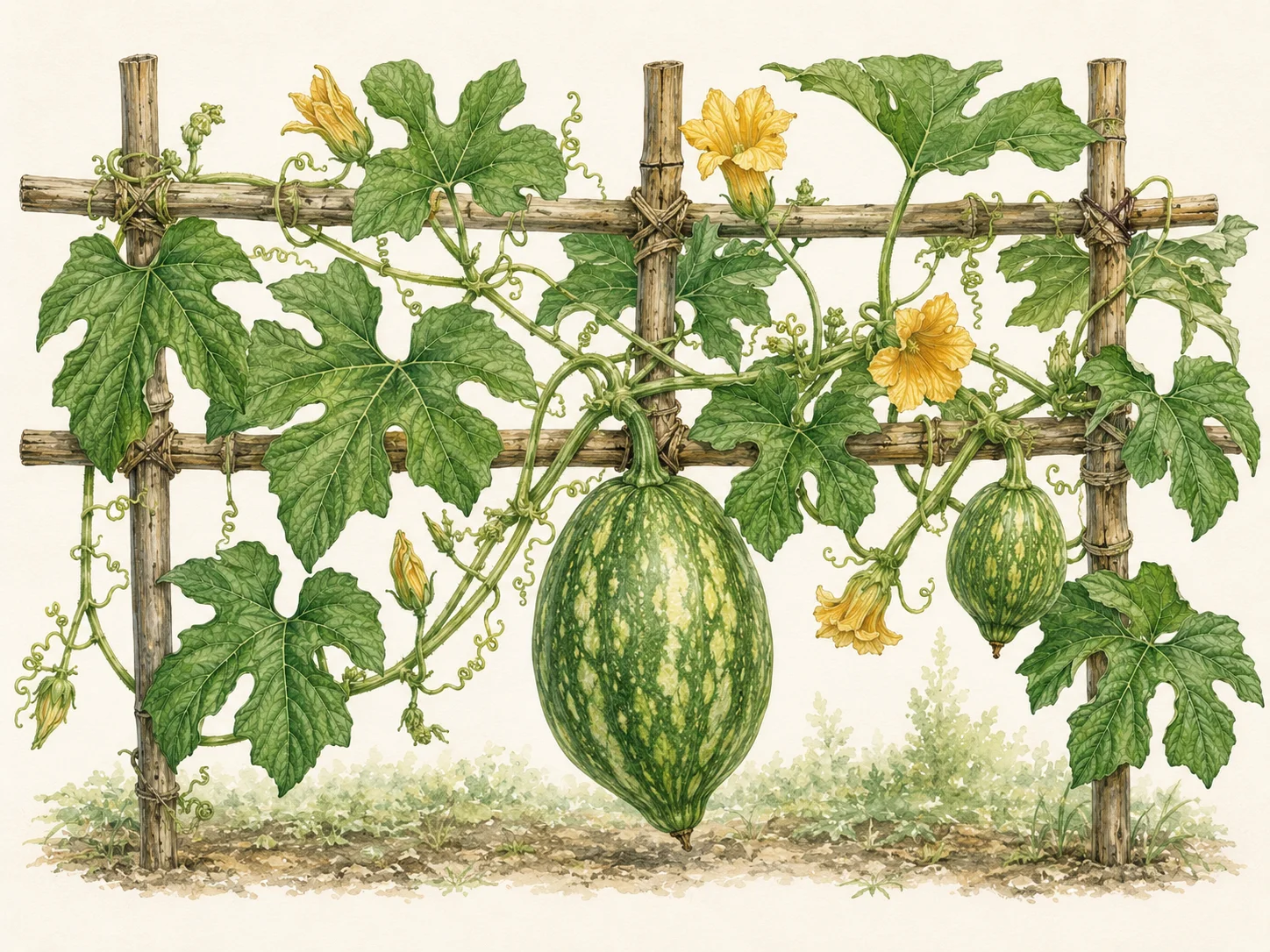
Chilacayote / Fig-Leaf Gourd / Shark Fin Melon (Trellised)
Cucurbita ficifolia
Suitability for this climate: Recommended
This profile covers Cucurbita ficifolia grown on a dedicated heavy structure for its edible mature fruit, young fruit, seeds or tender shoots. It is commonly called chilacayote, fig-leaf gourd, fig-leaf squash, Malabar gourd, seven-year melon or shark fin melon. It is distinct from ordinary pumpkin, winter squash, watermelon and wax gourd. Mature fruit can become large and heavy, so elevated vertical growing is specialist only. Fruit must be supported in a rigid cradle or allowed to rest on the ground or a platform.
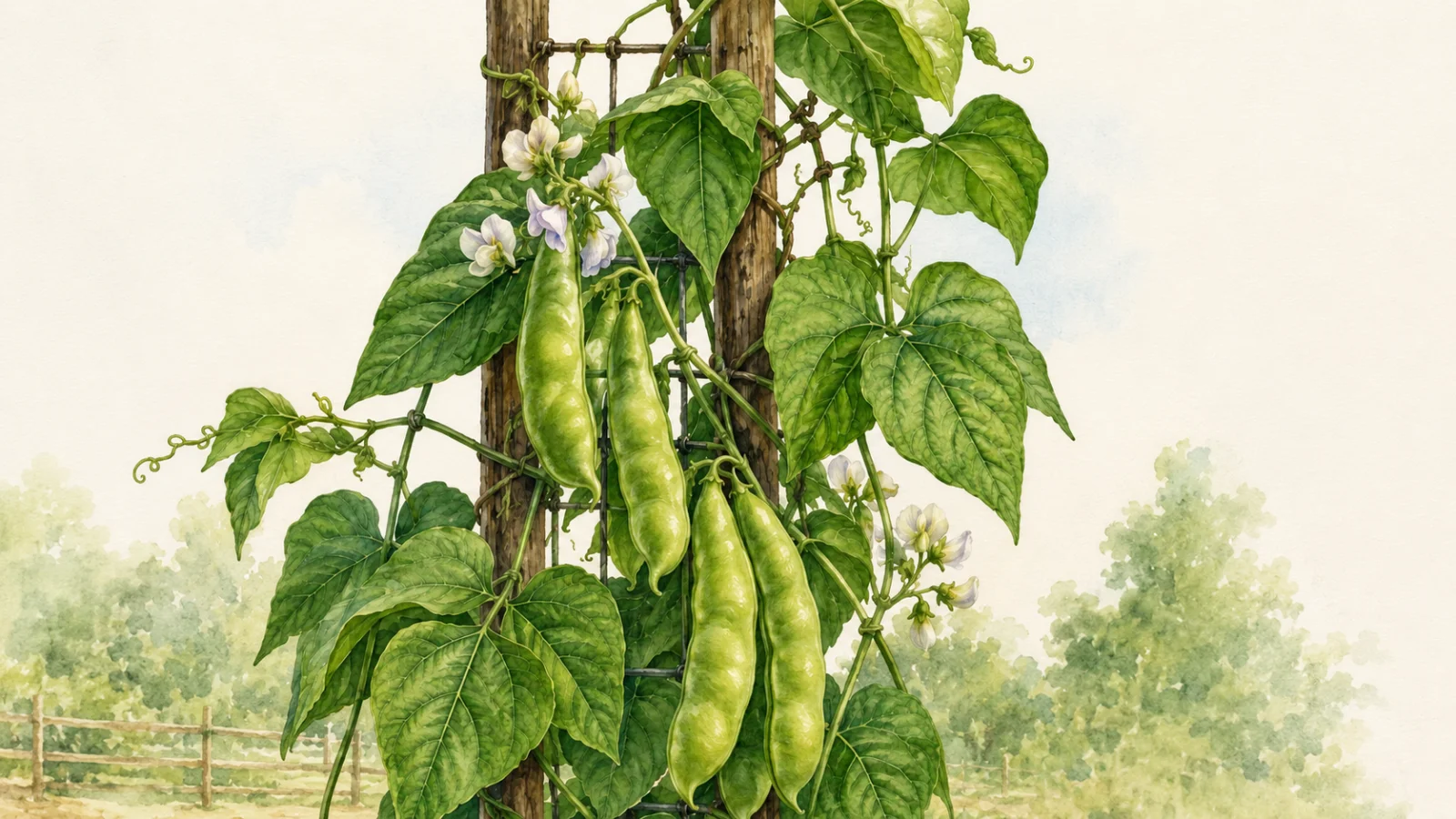
Climbing Lima Bean / Butter Bean / Madagascar Bean
Phaseolus lunatus
Suitability for this climate: Recommended
This profile covers climbing forms of Phaseolus lunatus grown vertically for fresh shell beans or mature dry beans. It includes pole lima beans, climbing butter beans and long-lived tropical forms commonly sold as Madagascar beans. It does not cover bush lima beans, ordinary pole snap beans or other climbing bean species. Follow cultivar-specific guidance where maturity, day-length response or perennial behaviour differs. Phaseolus lunatus includes both annual and perennial forms. Most temperate garden cultivars are managed as annuals, while some tropical climbing forms may persist and crop for more than one season. This profile does not cover bush lima beans, common pole beans, scarlet runner beans or ornamental Phaseolus seed not sold as an edible cultivar. Lima-bean pods are normally shelled rather than eaten whole.
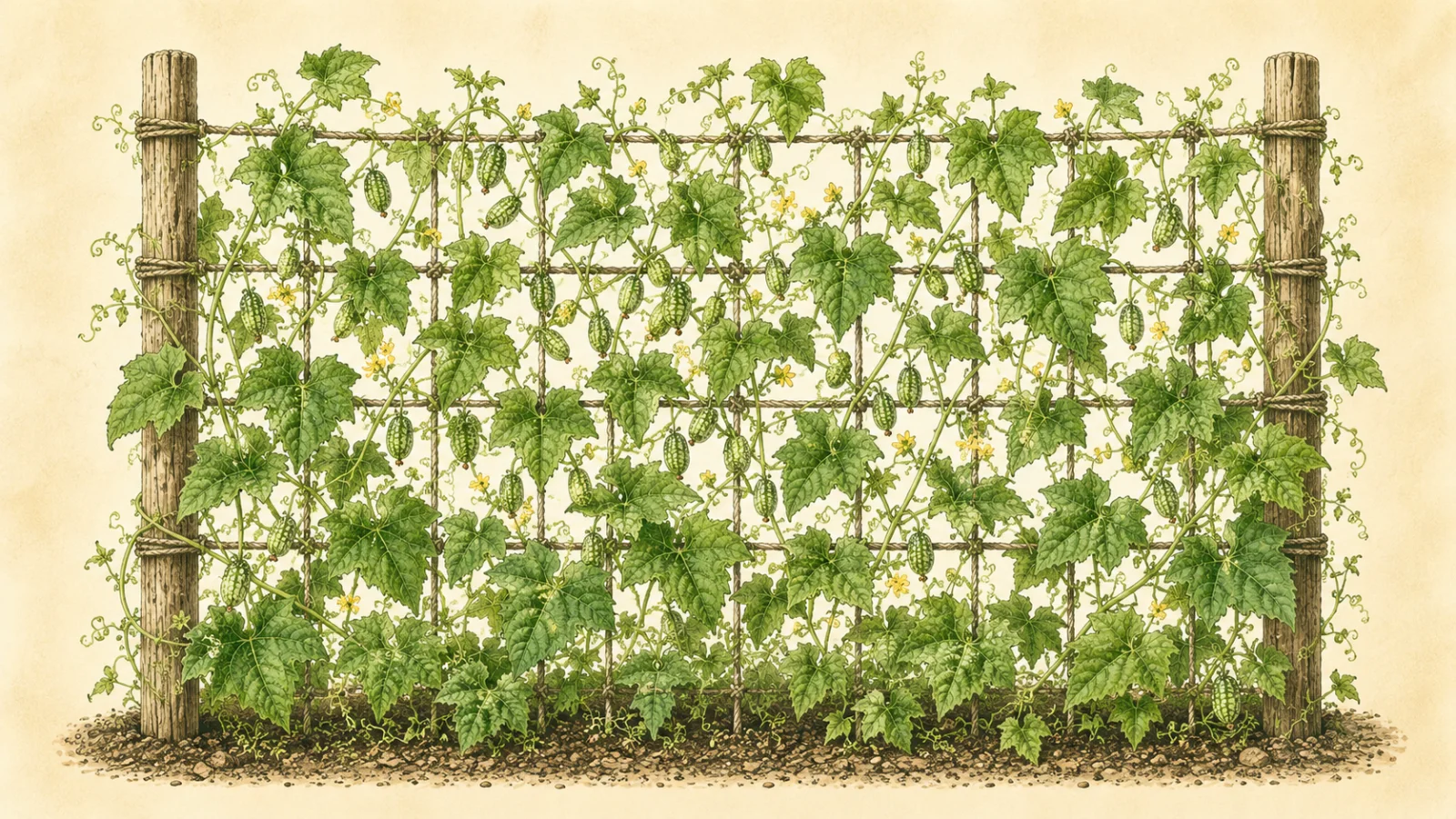
Cucamelon / Mouse Melon
Melothria scabra
Suitability for this climate: Recommended
This profile covers Melothria scabra grown vertically for its small, tangy fruit, commonly called cucamelons, mouse melons or Mexican sour gherkins. It does not cover ordinary cucumbers, kiwano, pepquino-branded hybrids or other Melothria species. Cucamelon is a tender perennial with tuberous roots in frost-free climates but is commonly grown as an annual vegetable elsewhere.
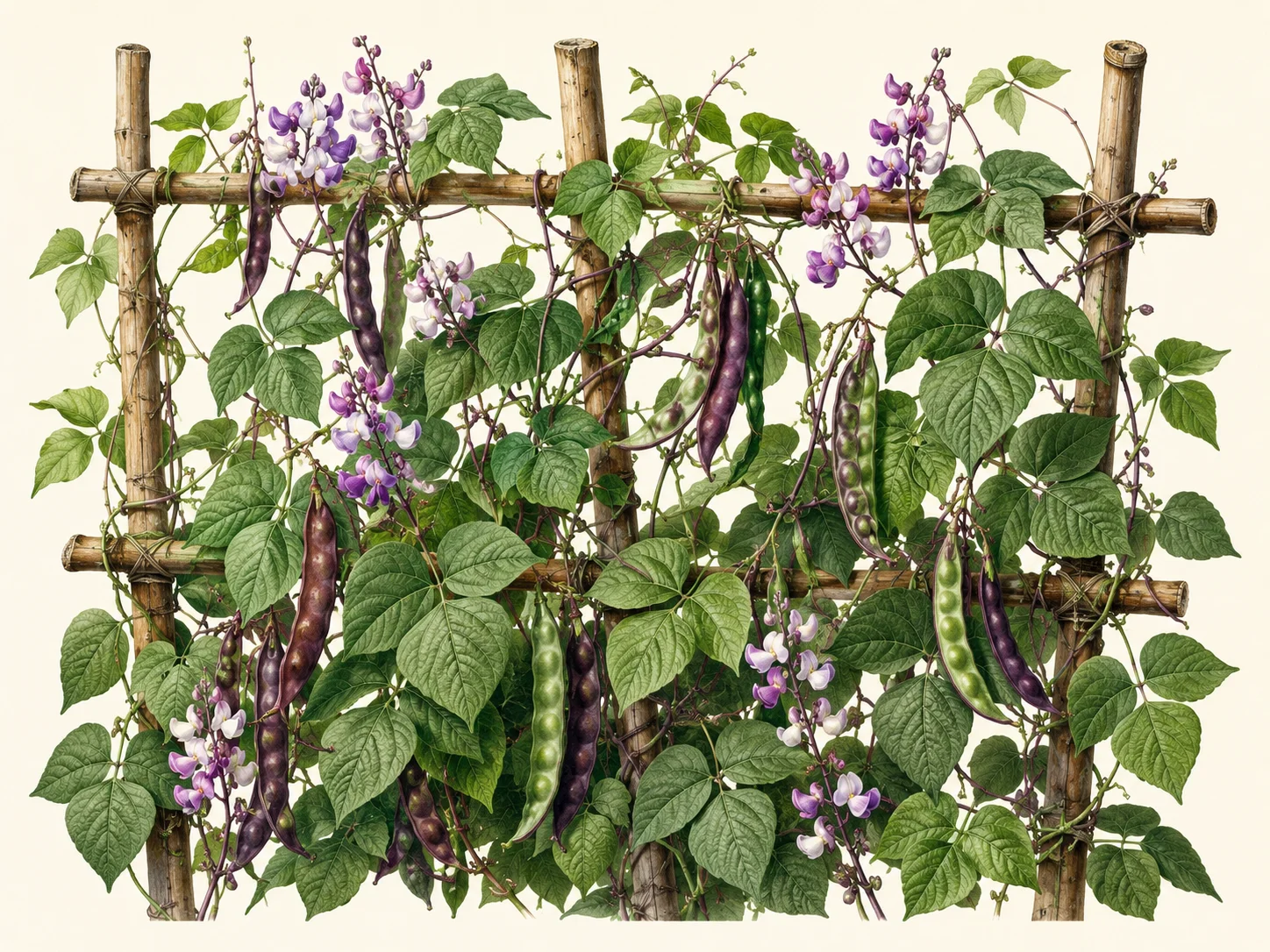
Hyacinth Bean / Lablab Bean
Lablab purpureus
Suitability for this climate: Recommended
This profile covers edible cultivars of Lablab purpureus grown vertically for cooked young pods, fresh shell beans or mature dry seed. It is also called hyacinth bean, lablab bean, Indian bean, field bean or sem. Lablab is a short-lived tropical perennial but is commonly cultivated as an annual vegetable or ornamental vine. Not every ornamental hyacinth-bean seed line is intended for food. Use a named edible cultivar and follow cultivar-specific preparation guidance. This profile does not cover common pole bean, lima bean, winged bean or jack bean.
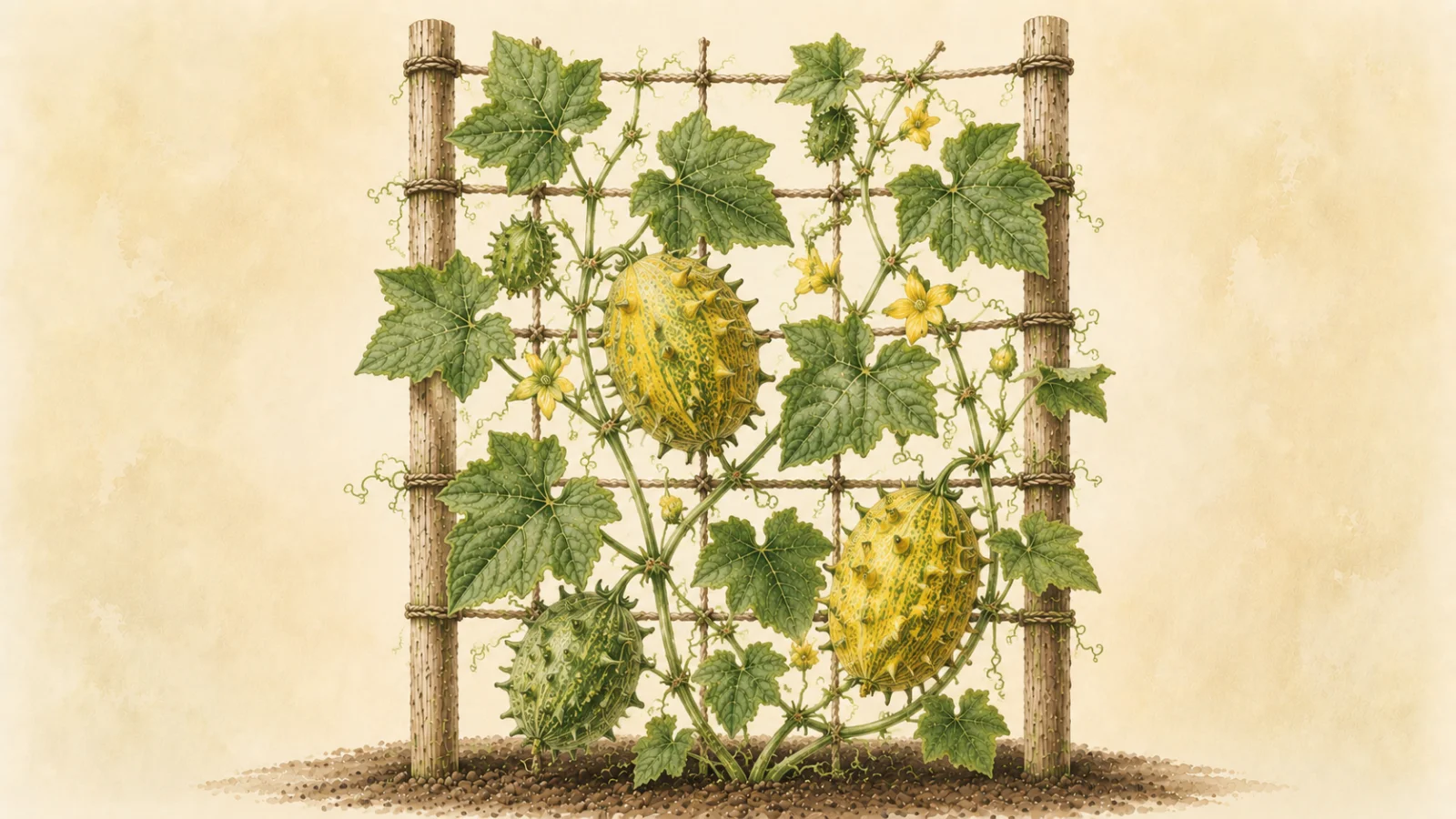
Kiwano / African Horned Cucumber
Cucumis metuliferus
Suitability for this climate: Recommended
This profile covers Cucumis metuliferus grown vertically for its ripe edible fruit, commonly called kiwano, African horned cucumber, horned melon or jelly melon. The fruit is normally harvested when the skin changes from green to yellow-orange or orange and the interior contains green, jelly-like flesh and edible seeds. It does not cover ordinary cucumbers, African wild Cucumis species, pepino melon or bitter melon. Kiwano is an annual crop.
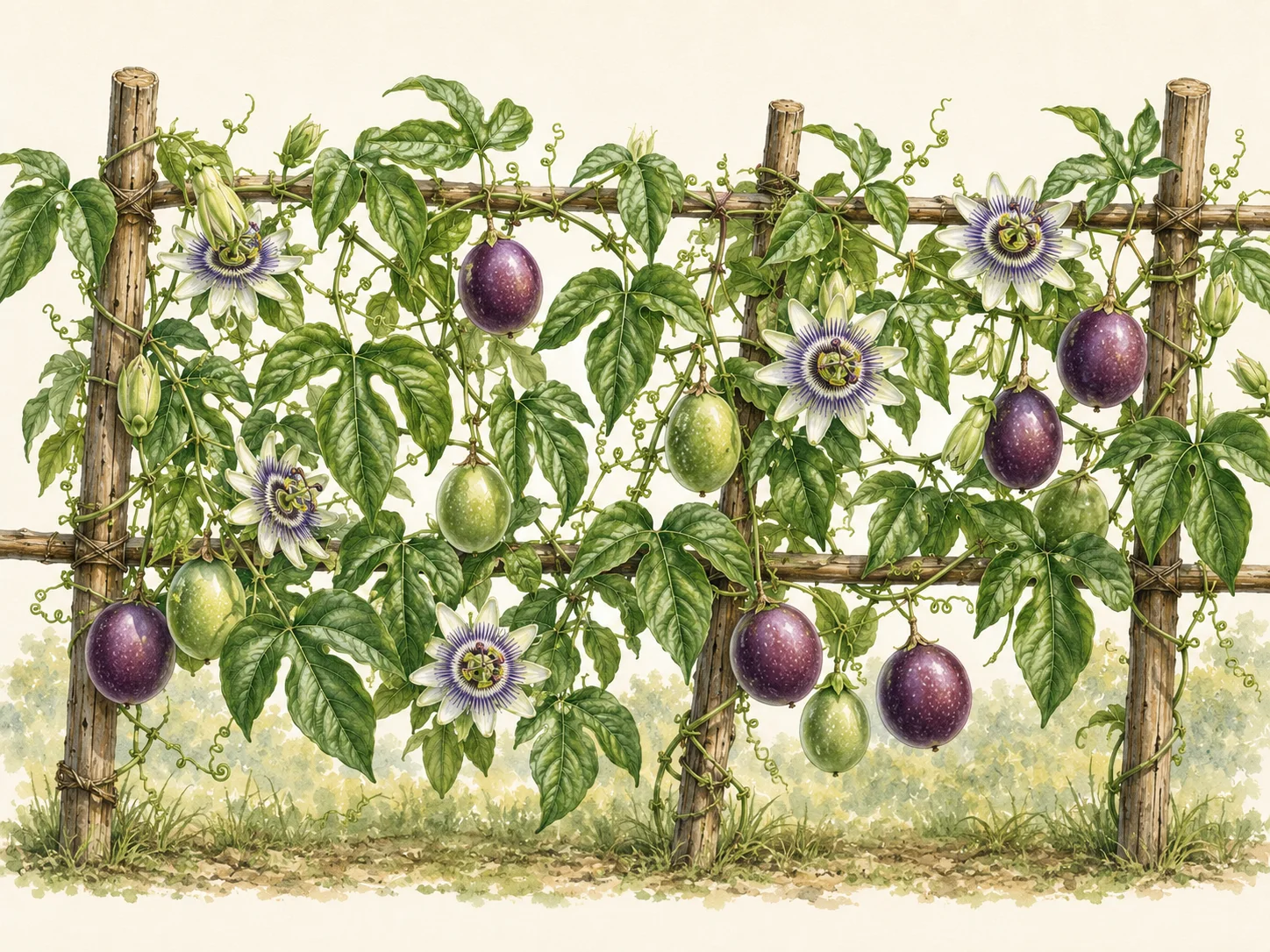
Passionfruit (Trellised)
Passiflora edulis
Suitability for this climate: Recommended
This profile covers edible passionfruit cultivars and forms of Passiflora edulis grown on a permanent trellis for fruit production. It includes purple passionfruit and yellow passionfruit, often listed as P. edulis f. flavicarpa, together with cultivated hybrids derived mainly from them. It does not cover banana passionfruit, giant granadilla, sweet granadilla, maypop or ornamental Passiflora species. These crops differ in climate, pollination, fruit and weed risk. Purple and yellow forms differ in cold tolerance, disease response and pollination. Purple passionfruit is often self-compatible, while yellow forms and some cultivars may require pollen from a compatible second vine. Cultivar-specific pollination guidance should take priority.
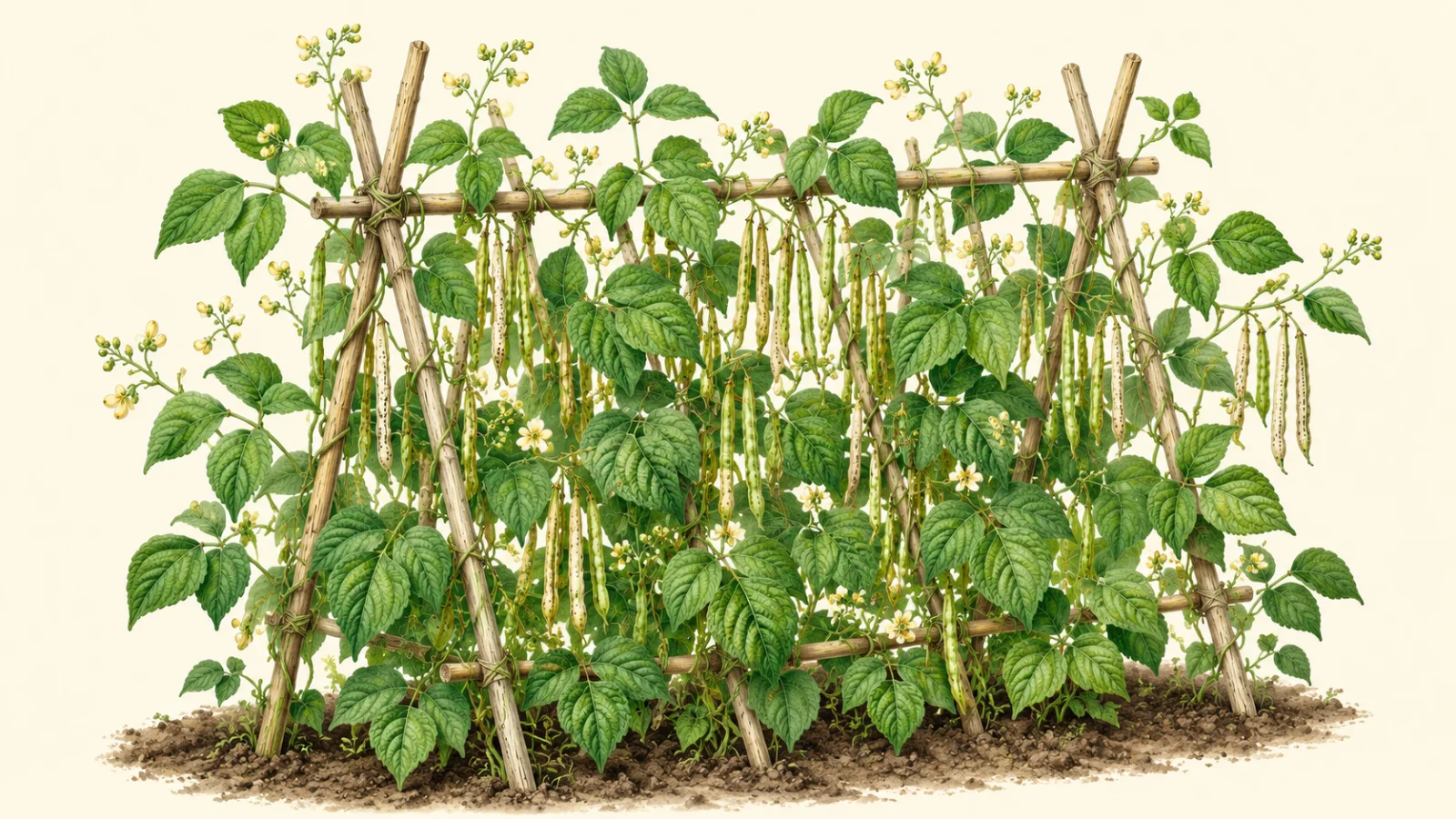
Rice Bean
Vigna umbellata
Suitability for this climate: Recommended
This profile covers climbing or twining forms of rice bean (Vigna umbellata) trained vertically and grown mainly for their small edible dry seeds. It includes locally selected grain landraces also sold as ricebean or climbing mountain bean. It does not cover adzuki bean, mung bean, cowpea, yardlong bean or other Vigna species. Follow seed-source guidance because growth habit, flowering response and maturity can vary between landraces. Some forms are compact or scrambling rather than strongly climbing; choose a vining cultivar for a vertical garden. Traditional landraces may require days shorter than about 12 hours to flower and can remain vegetative under long days. It does not cover adzuki bean, mung bean, cowpea, yardlong bean or rice.
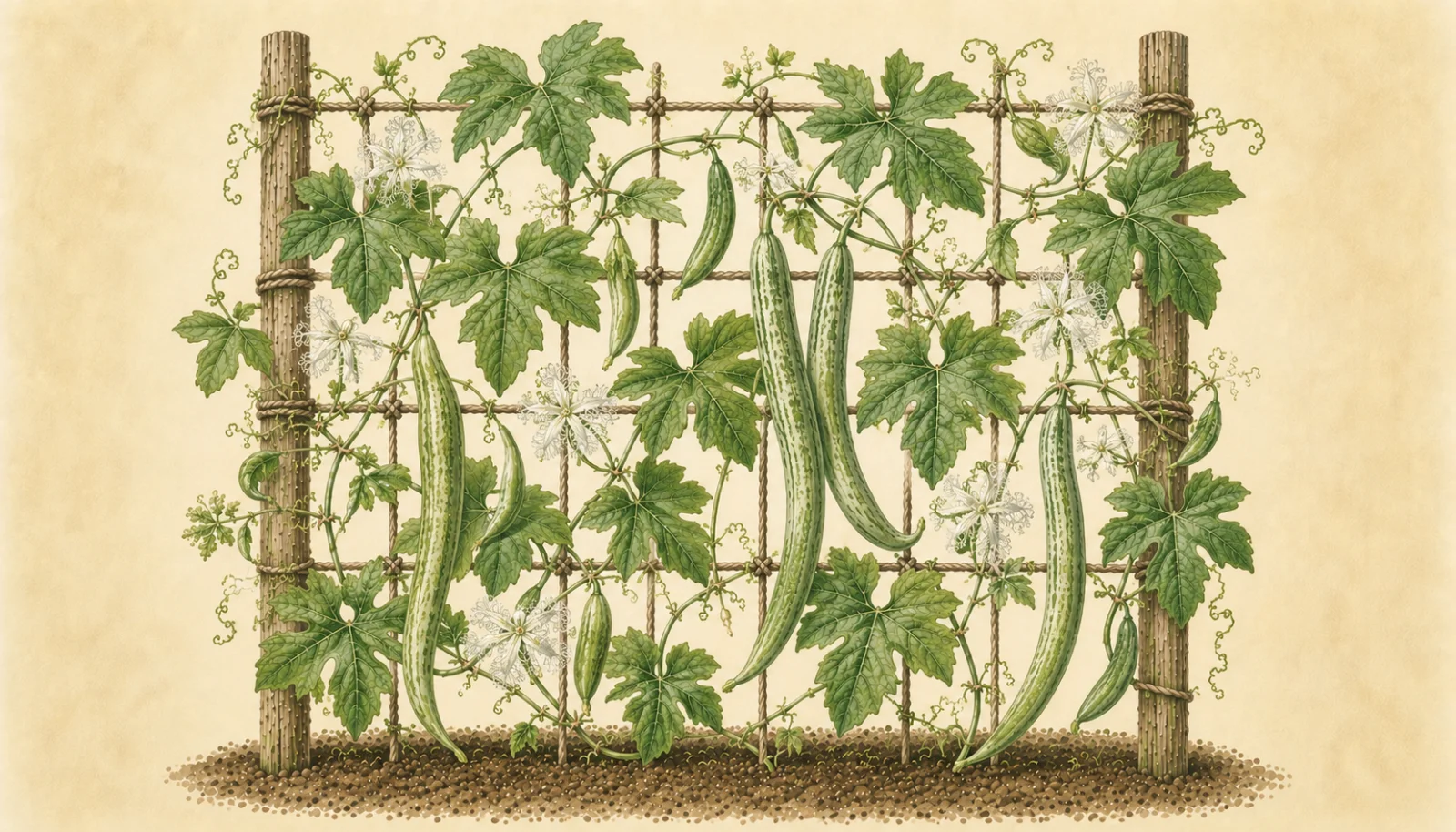
Snake Gourd (Trellised)
Trichosanthes cucumerina
Suitability for this climate: Recommended
This profile covers cultivated snake gourd grown vertically for its tender immature fruit. It primarily refers to the long-fruited cultivated form of Trichosanthes cucumerina, historically also listed as T. cucumerina var. anguina or T. anguina. It does not cover yardlong or snake bean, bottle gourd, bitter melon, pointed gourd or the small-fruited wild form of Trichosanthes cucumerina. Fruit shape and mature length vary greatly between compact and extra-long cultivars. Snake gourd is normally harvested while green and tender. Fully mature fruit becomes fibrous and changes towards orange or red and is outside the usual vegetable-harvest stage.
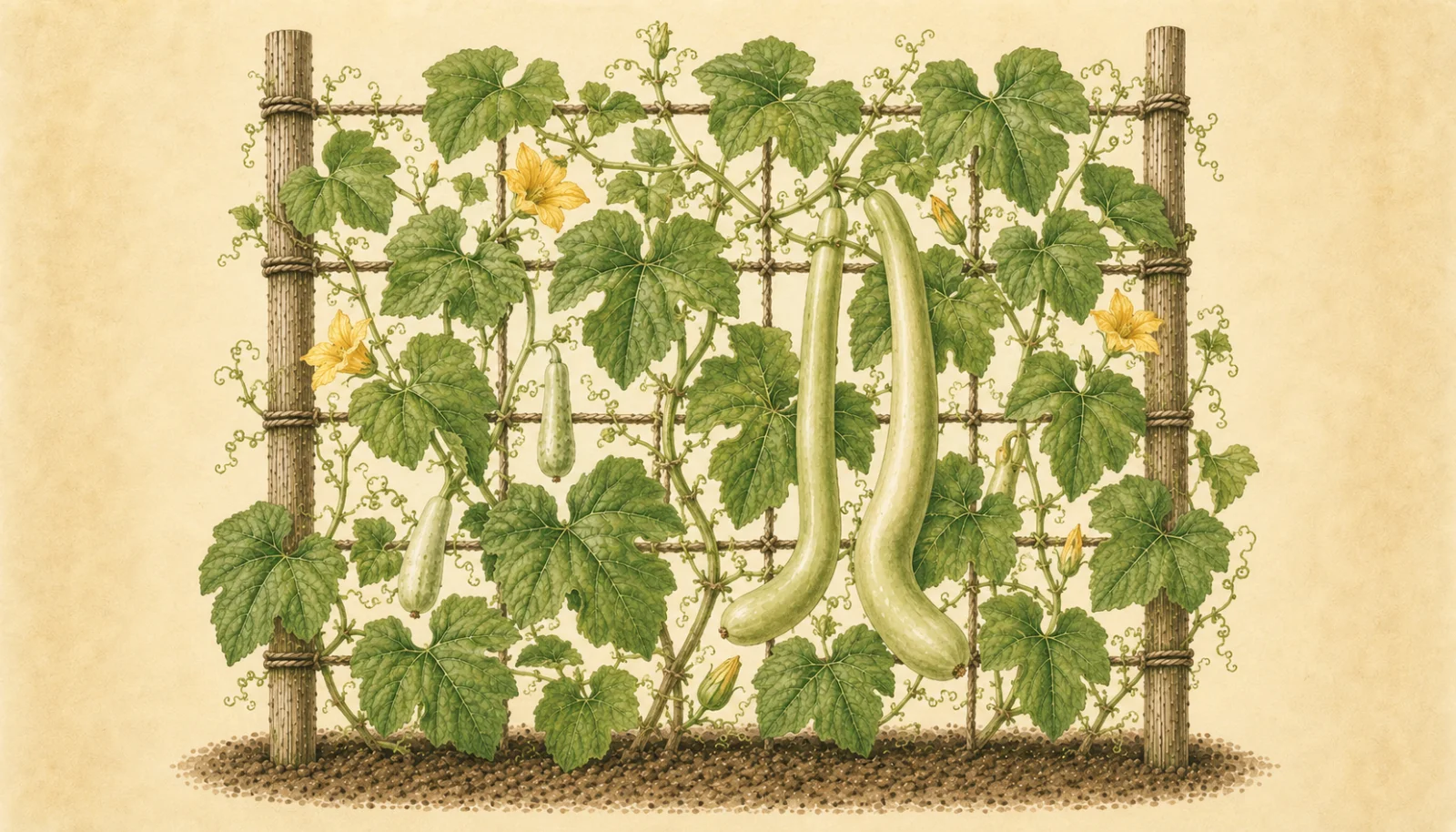
Tromboncino / Climbing Summer Squash
Cucurbita moschata
Suitability for this climate: Recommended
This profile covers tromboncino, trombetta and rampicante-type Cucurbita moschata squash grown vertically and harvested primarily while young and tender as a summer squash. It includes cultivars commonly sold as Tromboncino, Trombetta di Albenga, Climbing Trombetta, Zucchetta Rampicante and Rampicante-Tromboncino. It does not cover bush zucchini, ordinary crookneck summer squash, standard butternut squash or unrelated bottle gourds. Fruit may also be left to mature into a tan, hard-rinded winter squash, but the main planner guidance is for repeated young-fruit harvest.
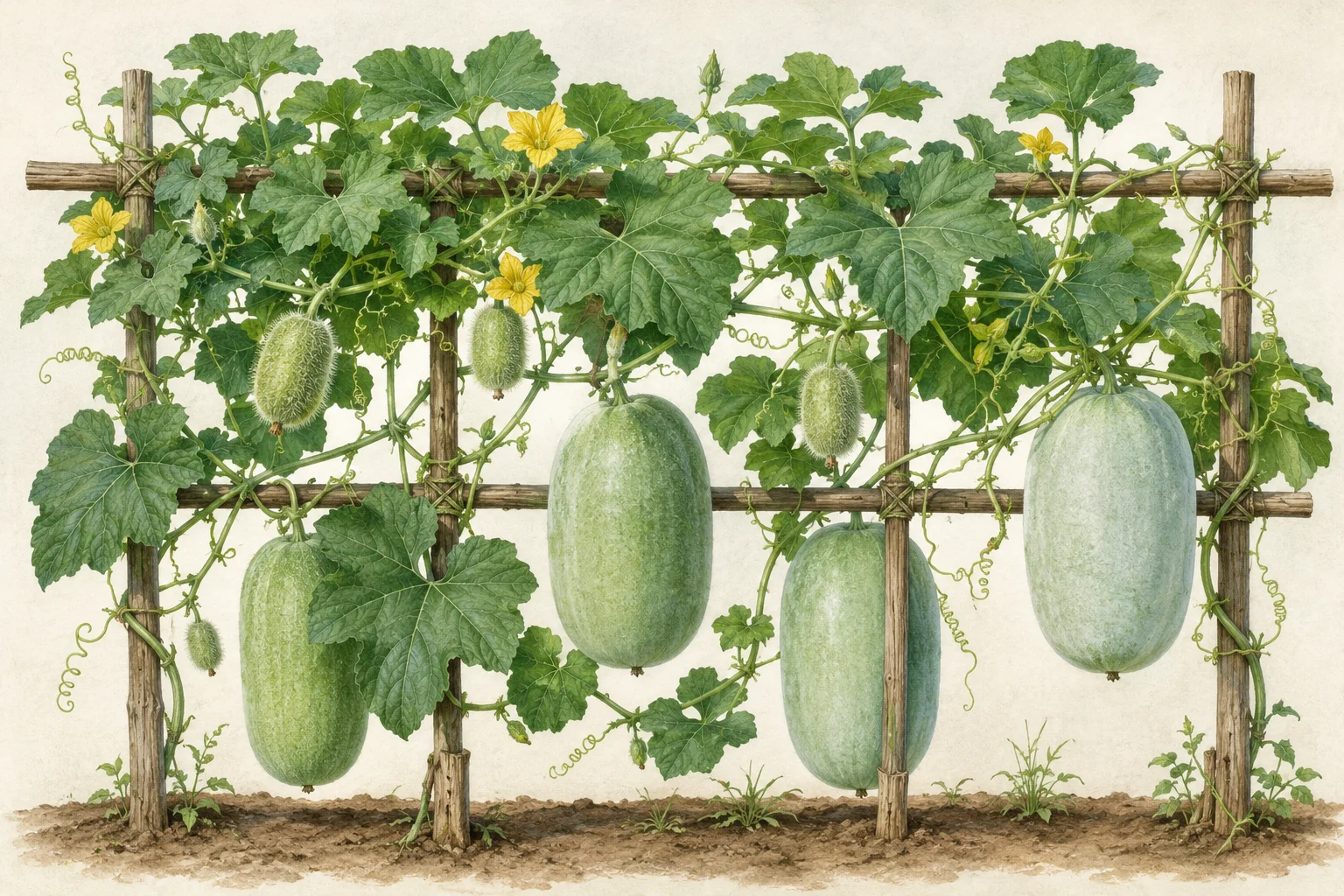
Wax Gourd / Winter Melon / Fuzzy Melon (Trellised)
Benincasa hispida
Suitability for this climate: Recommended
This profile covers Benincasa hispida grown vertically for either young fuzzy melon or mature wax gourd, also called winter melon. Young fruit is harvested while small, tender and hairy; mature fruit develops a harder rind and a pale waxy bloom and is used as a storage vegetable. It does not cover bottle gourd, luffa, watermelon or other crops called winter melon. Mature wax-gourd fruit can become extremely heavy, so vertical growing is restricted to smaller cultivars or fruit supported by an extra-heavy structure and individual cradle.
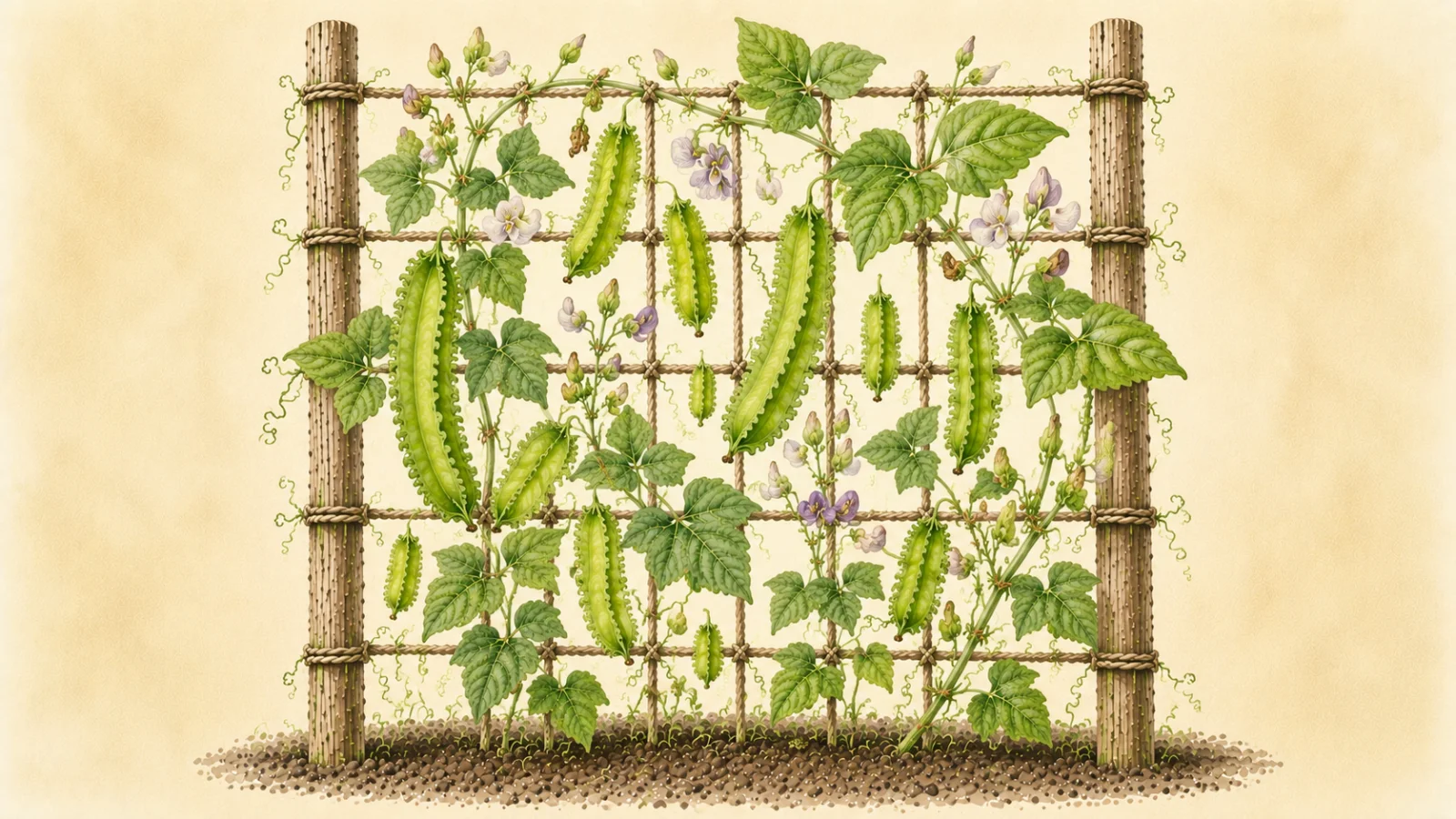
Winged Bean
Psophocarpus tetragonolobus
Suitability for this climate: Recommended
This profile covers cultivated winged bean (Psophocarpus tetragonolobus) grown vertically, primarily for its tender immature pods and young shoot tips. It is a frost-tender tropical climbing plant that may persist as a perennial in year-round warm climates but is commonly managed as an annual vegetable crop. It does not cover asparagus pea or winged pea (Lotus tetragonolobus), which is a separate, non-climbing Mediterranean species. Many traditional cultivars require short days to initiate flowering, while day-neutral cultivars flower more reliably outside equatorial regions. This profile does not cover yardlong bean, common pole bean, hyacinth bean, yam bean or sword bean. Mature seed and tuber production have different harvest and preparation requirements and are outside the main scope of this profile.
The best crop for your garden depends on more than climate alone. Check the plant’s mature size, support strength, spacing, container needs and expected harvest time before choosing a position.
In humid subtropical conditions, open trellising, reliable drainage and regular harvesting can make a major difference. Avoid crowding vigorous vines together, inspect dense foliage after wet weather and choose locally adapted cultivars where possible.
Open any crop profile for detailed planting, training and climate guidance, or use the Climbing Crops planner to calculate how many plants will fit along your support.
Ready to plan?
Use the planner to work out spacing, plant counts and support height for your space.