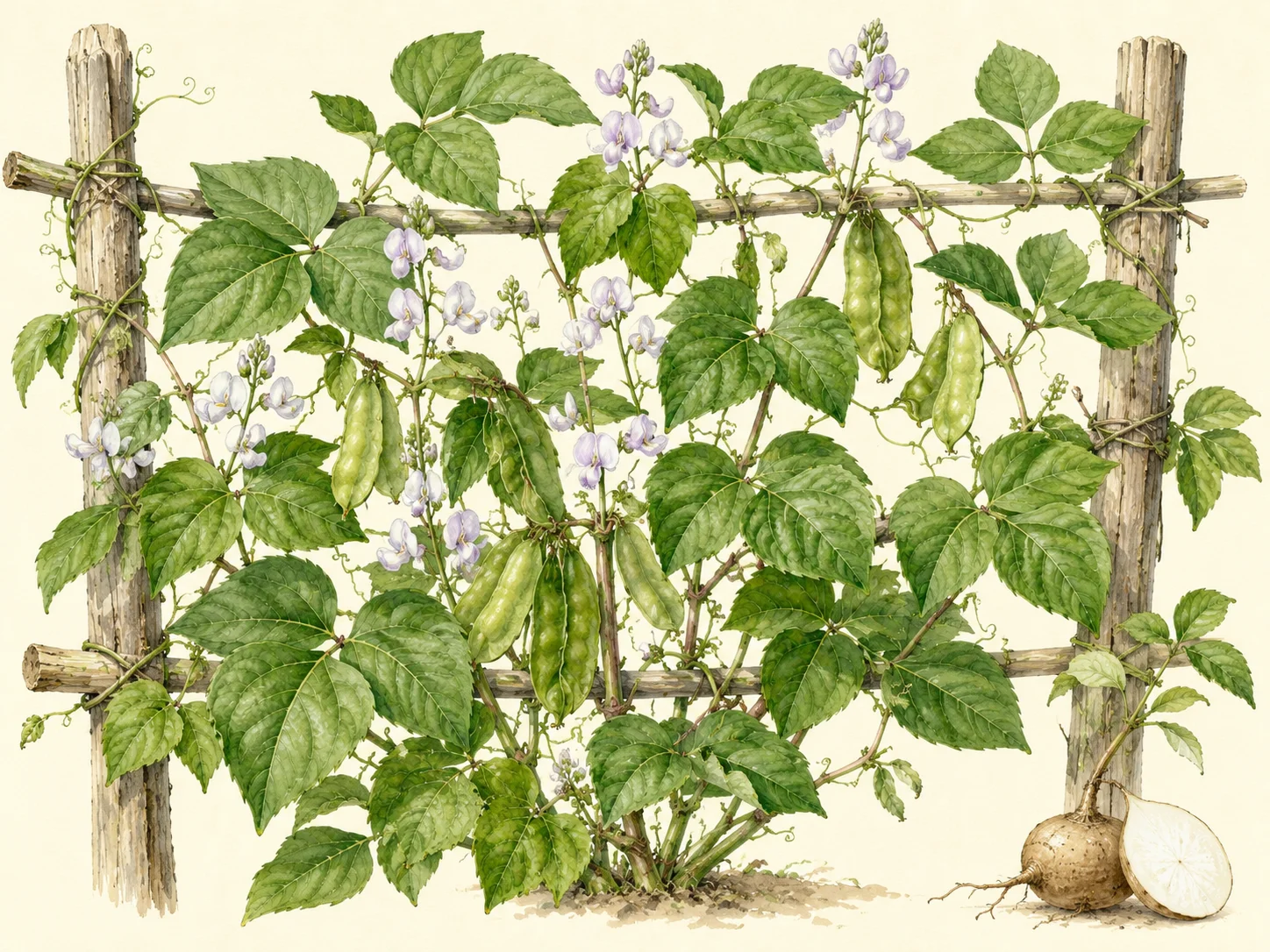
Jicama / Yam Bean
Jicama / Yam Bean / Mexican Turnip
Pachyrhizus erosus
Crop overview
- Crop group
- Tuberous Root Vine
- Lifecycle
- Annual
- Growth habit
- Long, Vigorous Twining Legume Usually Grown As A Warm-Season Annual For Its Edible Underground Tuber
Covers Pachyrhizus erosus grown for jicama roots. Botanically perennial in the tropics, but commonly managed as an annual crop. Only the tuberous root is eaten.
Variety examples
Mexican jicama, Yam bean
Quick facts
- Plant spacing
- 15 cm – 30 cm
- Row spacing
- 30 cm
- Support height
- 90 cm – 1.50 m
- Support strength
- Light
- Support types
- String Trellis, Light Wire Trellis, Bamboo Trellis, Garden Fence
- Training method
- Twining
- Vertical suitability
- Recommended
- Sun requirement
- Full Sun
- Days to harvest
- 150–270 days
Support & training
Training requirements
Guide young stems onto a trellis and keep the vine within reach. Where root size is the goal, pinch back very long vines and remove flowers before seed pods develop.
Pruning requirements
Pinch or shorten excessive vine growth to keep plants manageable and direct more energy toward the tuber. Remove flowers if growing solely for edible roots.
Growing setup guidance
Container
Minimum size: 40 L
Plants per container: 1
Use a deep, broad container that gives the tuber room to swell. Provide a light trellis and keep moisture consistent without waterlogging.
Raised bed
A deep raised bed with loose, fertile, well-drained soil makes tuber harvest easier. Train vines vertically and pinch excessive top growth if root production is the priority.
In-ground
Grow in light, fertile, well-drained soil in full sun. Give the root zone enough depth and keep moisture consistent during rapid growth.
Planting, pollination & harvest
Sowing / transplanting
Start seed indoors 4-6 weeks before the last frost in cooler climates, or direct sow once conditions are reliably warm. Jicama needs a long frost-free growing period.
Pollination
Pollination is unnecessary when growing for the edible tuber and flower removal is commonly used to favour root growth.
Warnings
Only the underground tuber is eaten. Leaves, stems, flowers, pods and seeds contain toxic compounds and must not be eaten; keep seed pods away from children and animals.
General notes
Jicama vines can become very long even though gardeners often prune them to a much shorter trellised framework. A long, warm growing season is the main requirement for a useful root crop.
Climate guidance
Climate suitability: Specialist
Planting season
Start indoors in late winter or early spring and plant out only after frost danger
Northern hemisphere months
Feb-Apr
Southern hemisphere months
Aug-Oct
Wet / dry season
Water consistently through summer growth.
Soil temperature
Wait for reliably warm soil before planting out.
Frost sensitivity
Any frost can end the crop.
Heat sensitivity
Generally handles summer heat with adequate water.
Humidity / disease
Avoid waterlogged soil.
Sowing guidance
Use transplants to maximise the warm growing period.
Notes
Works only where the hot season is long enough to provide roughly 5 months or more of frost-free warmth.