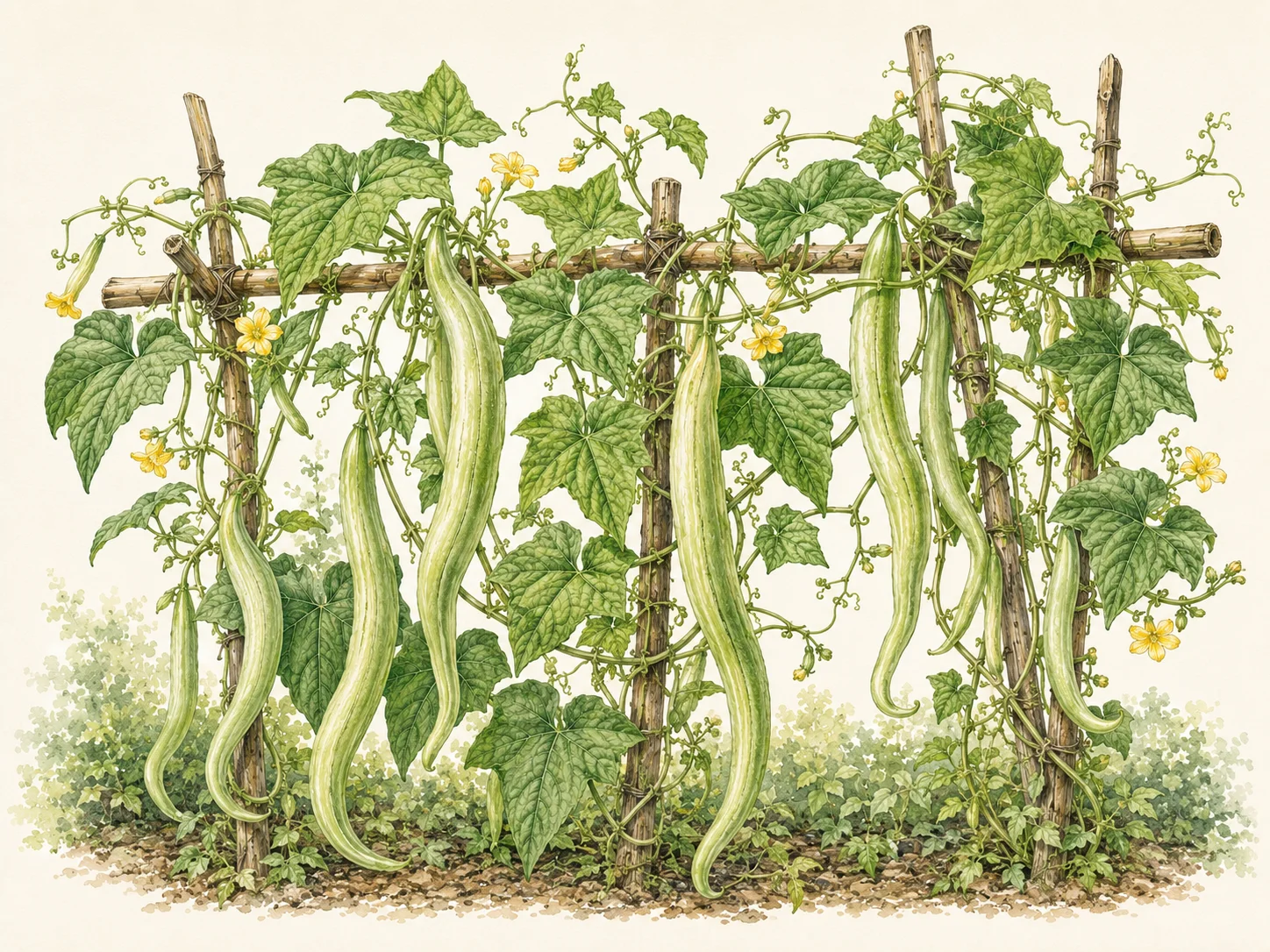
Botanical illustration of Armenian cucumber or snake melon growing on a rustic trellis, with trailing vines, lobed green leaves, yellow flowers, curling tendrils, and long pale green striped fruits hanging vertically.

Armenian Cucumber / Snake Melon

Armenian Cucumber / Snake Melon / Yard-Long Cucumber

Cucumis melo var. flexuosus

Crop overview

Crop group
Cucurbit
Lifecycle
Annual
Growth habit
Vigorous Warm-Season Vine With Tendrils And Long Ribbed Fruit

This profile covers Armenian cucumber and snake-melon cultivars grown vertically and harvested while immature as crisp, mild cucumber-like fruit. Despite the common name, Armenian cucumber is botanically a melon in the Flexuosus group of Cucumis melo rather than a true cucumber, Cucumis sativus. It includes pale green, dark green and striped long-fruited cultivars. It does not cover snake gourd, ordinary cucumber, mature sweet muskmelon, bitter melon or yardlong bean. Fruit is intended for immature harvest before the rind, flesh and seeds harden.

Variety examples

Armenian Pale Green, Striped Armenian, Painted Serpent, Dark Green Armenian

Quick facts

Plant spacing
30 cm – 60 cm
Row spacing
1.20 m
Support height
1.50 m – 2.10 m
Support strength
Medium
Support types
Sturdy Trellis Netting, Wire Trellis, Garden Arch, Cattle-Panel Trellis, Sturdy Fence
Training method
Tendril
Vertical suitability
Recommended
Sun requirement
Full Sun
Days to harvest
60–75 days

Support & training

Training requirements

Install a sturdy trellis, fence, arch or strong netting before planting. Guide young vines onto the support and loosely tie them until tendrils attach. Spread vigorous shoots across open sections of the trellis and keep fruit hanging freely. Redirect young fruit that begins growing through narrow mesh so it does not become trapped or bent. The fruit does not normally need a sling because it is long and relatively light when harvested at the tender stage.

Pruning requirements

Pruning is optional. Redirect or shorten excessively long shoots and remove damaged, diseased or severely crowded growth where needed for airflow and harvest access. Avoid heavy pruning because healthy foliage supplies energy for repeated fruit production and protects fruit from intense sun. Frequent harvesting is more important than pruning for maintaining continued flowering and tender fruit.

Growing setup guidance

Container

Minimum size: 40 L

Plants per container: 1

Grow one plant in a broad, stable container holding at least 40 L (about 11 US gal) of potting mix. A larger container provides more stable moisture for vigorous cultivars in hot or windy conditions. Provide excellent drainage, consistent moisture, regular feeding and a firmly anchored trellis. Allow long fruit to hang freely so it develops straight rather than curling on the ground. Check moisture frequently during flowering and fruit enlargement, but never leave the root zone waterlogged.

Raised bed

Plant beside an installed trellis and provide fertile, moisture-retentive but freely draining soil. Leave enough access to guide the vigorous vines and harvest every few days. Position the support where the canopy will not heavily shade shorter crops unless summer shade is intentional. Raised beds improve drainage in wet climates but may need frequent irrigation in hot dry weather.

In-ground

Plant in warm, fertile and freely draining soil beside a completed support. Incorporate organic matter where soil is poor and mulch only after it has warmed. Maintain consistent moisture during flowering and fruit development. Avoid low areas that remain waterlogged and avoid repeatedly wetting foliage late in the day. Trellising keeps the long fruit straighter, cleaner and easier to find.

Planting, pollination & harvest

Sowing / transplanting

Direct sow after frost danger has passed when the soil is thoroughly warm, preferably at least about 18°C (65°F). For an earlier crop, start seedlings in individual pots about 3–4 weeks before planting out. Harden them gradually and transplant carefully because melon roots dislike disturbance. Sow approximately 1–2 cm deep or follow cultivar-packet guidance. Install the trellis before sowing or transplanting.

Pollination

Armenian cucumber produces male and female flowers on the same plant. Bees and other insects normally transfer pollen between flowers. The first flowers are often male and naturally fall without producing fruit. Poor pollination can cause misshapen fruit or young fruit that yellows and stops growing. Remove insect-excluding covers once flowering begins, or hand pollinate in the morning where pollinator activity is low.

Warnings

Armenian cucumber is very frost-tender and grows poorly in cold soil. It needs a long, warm season for reliable production. Watch for aphids, mites, cucumber beetles, caterpillars, fruit flies, powdery mildew, downy mildew, anthracnose, bacterial diseases, wilts and cucurbit viruses. Irregular watering can produce misshapen, coarse or bitter fruit. Overmature fruit becomes seedy, less crisp and eventually develops a tougher rind. Long fruit may become trapped in trellis openings. Inspect it while small and redirect it if necessary. Do not eat fruit with a distinctly strong or unpleasant bitter taste. Spit it out and discard the fruit.

General notes

Harvest while the fruit is green, crisp, thin-skinned and tender, before the seeds become prominent. Many Armenian cucumbers are at their best around 30–35 cm long, although suitable size varies and some cultivars remain tender at 45–60 cm. Texture and seed development are better guides than maximum length. Cut fruit from the vine rather than pulling. Pick every two or three days during warm productive weather. Frequent harvesting encourages continued fruit set. Fruit grown on a trellis is usually straighter, while fruit resting on the ground tends to curl. The mild flesh can be used fresh or cooked in the same ways as cucumber.

Climate guidance

Climate suitability: Recommended

Planting season

Plant in late spring after frost danger has passed and soil and nights are reliably warm. The main crop develops during summer heat.

Wet / dry season

Water deeply and consistently during flowering and fruit enlargement. Avoid drought followed by heavy watering.

Soil temperature

Plant when soil is at least about 18°C (65°F). Warmer soil produces faster establishment.

Frost sensitivity

Very frost-tender. Harvest remaining fruit before autumn frost.

Heat sensitivity

Hot summers generally suit the crop. Extreme heat combined with dry soil may reduce flower retention and fruit quality.

Humidity / disease

Hot rainy periods can increase mildew, leaf-disease, aphid and mite pressure. Maintain airflow and avoid waterlogging.

Sowing guidance

Direct sow into warm soil or transplant seedlings started 3–4 weeks earlier. Install the trellis before planting.

Notes

Pick frequently during peak heat because fruit grows quickly and becomes seedy if overlooked.

Ready to plan?

Open the planner with Armenian Cucumber / Snake Melon preselected.