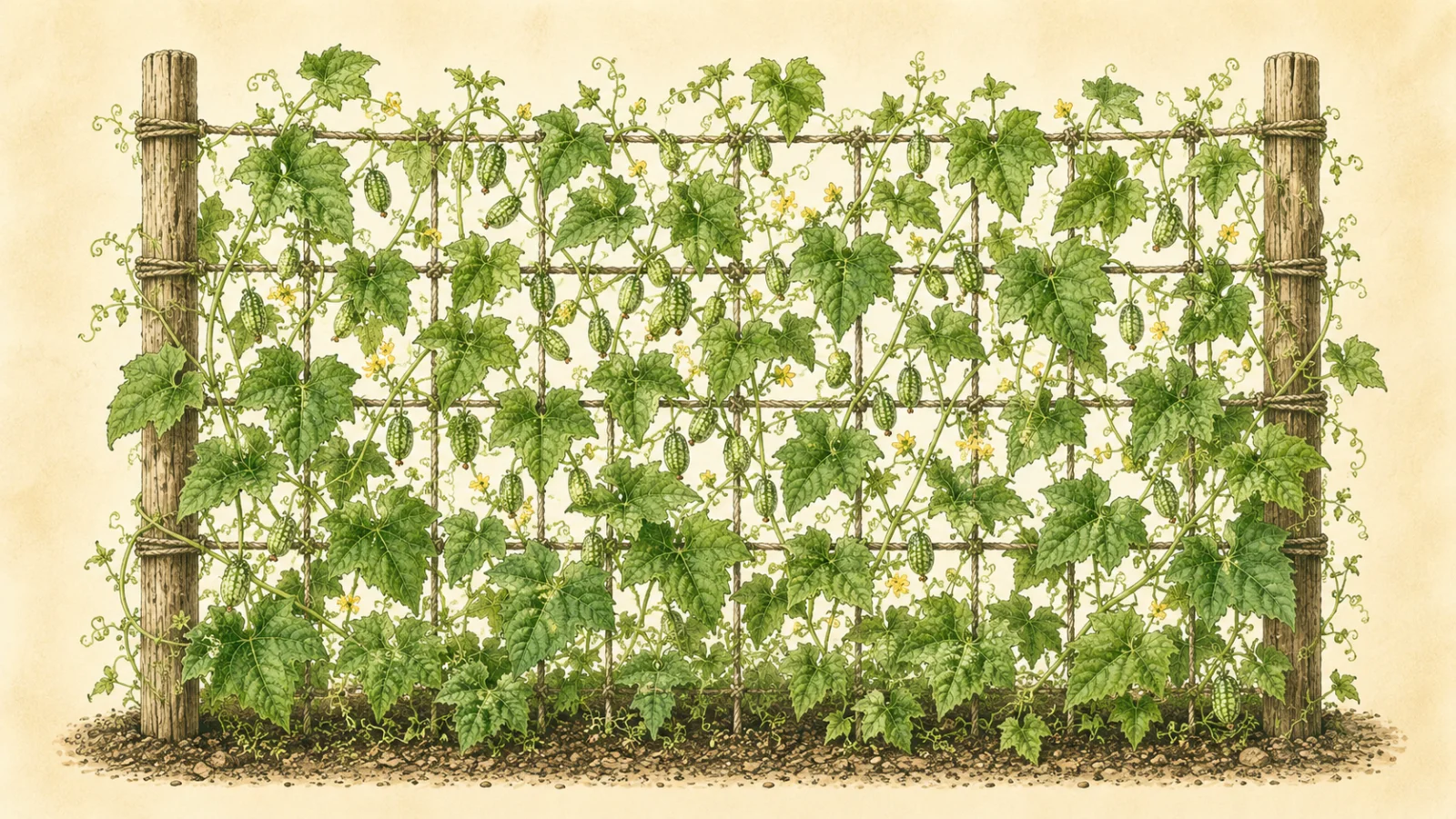
Botanical watercolor illustration of cucamelon (Melothria scabra) growing vertically on a rustic wooden trellis, with vigorous green vines, small triangular leaves, curling tendrils, yellow flowers, and numerous tiny watermelon-patterned fruits in various stages of development against a soft cream background.

Cucamelon / Mouse Melon

Cucamelon / Mouse Melon / Mexican Sour Gherkin

Melothria scabra

Crop overview

Crop group
Cucurbit
Lifecycle
Perennial
Growth habit
Fast-Growing Delicate Climbing Vine With Tendrils And Tiny Edible Fruit

This profile covers Melothria scabra grown vertically for its small, tangy fruit, commonly called cucamelons, mouse melons or Mexican sour gherkins. It does not cover ordinary cucumbers, kiwano, pepquino-branded hybrids or other Melothria species. Cucamelon is a tender perennial with tuberous roots in frost-free climates but is commonly grown as an annual vegetable elsewhere.

Quick facts

Plant spacing
30 cm – 60 cm
Row spacing
1.20 m
Support height
1.50 m – 2.40 m
Support strength
Medium
Support types
Trellis Netting, Fine Wire Trellis, String Trellis, Garden Arch, Wire Fence, Large Tomato Cage
Training method
Tendril
Vertical suitability
Recommended
Sun requirement
Full Sun
Days to harvest
60–75 days

Support & training

Training requirements

Install netting, fine wire, string or another support that the small tendrils can grasp. Guide young vines toward the support and loosely tie them until they attach. Spread shoots across unused sections of the trellis as they grow. The stems are finer than ordinary cucumber vines, so avoid rough handling and very wide trellis openings.

Pruning requirements

Routine pruning is generally unnecessary. Redirect wandering shoots and remove damaged, diseased or badly tangled growth where needed. Pinching an overly long leader may encourage branching, but frequent harvesting and gentle training are usually enough to keep the plant manageable.

Growing setup guidance

Container

Minimum size: 20 L

Plants per container: 1

Grow one plant in a stable container holding at least 20 L (about 5 US gal) of potting mix. A larger container is preferable where summers are hot, dry or windy. Provide a light but firmly anchored trellis, consistent moisture and free drainage. The vines are slender but can become dense and may reach several metres. Harvest frequently and remove fallen ripe fruit where self-seeding is unwanted.

Raised bed

Plant beside an installed trellis or netting. Provide fertile, moisture-retentive but freely draining soil and enough access for frequent harvesting. Cucamelon can weave through neighbouring plants, so redirect shoots regularly and position the support where its fine but vigorous growth will not smother smaller crops.

In-ground

Plant in warm, fertile, freely draining soil beside a trellis, fence or wire support. Maintain even moisture during flowering and fruit production without saturating the root zone. In frost-free climates, the plant may persist from tuberous roots or self-seed. Remove unwanted seedlings and control spreading vines where necessary.

Planting, pollination & harvest

Sowing / transplanting

Sow after frost danger has passed when soil has warmed to at least about 18°C (65°F). For an earlier crop, start seed indoors about 4–6 weeks before planting out. Germination is usually best around 22–24°C (72–75°F). Harden seedlings gradually and transplant carefully once nights are mild. Install the support before or at planting time. Direct sowing works well where the warm season is long.

Pollination

Cucamelon produces small male and female flowers on the same plant. Bees and other small insects normally transfer pollen between the flowers. One plant can produce fruit, although pollinator activity and more than one flowering plant may improve fruit set. Avoid applying insecticides while flowers are open and pollinators are active.

Warnings

Cucamelon is frost-tender and grows slowly in cold soil or cool nights. Watch for aphids, mites, cucumber beetles, slugs, snails, powdery mildew and other cucurbit diseases, although healthy plants are often relatively trouble-free. The fine vines can spread through nearby crops and may self-seed in warm climates. Overripe fruit becomes softer, seedier and more sharply sour, so harvest regularly.

General notes

Harvest fruit while firm, green and about 2.5–4 cm long, before it softens or begins to yellow. The fruit should resemble a miniature watermelon and have a crisp, cucumber-like texture with a citrusy tang. Pick every few days during active production. Fruit can be eaten fresh, pickled or added to salads and cooked dishes. In frost-free climates, tuberous roots may survive and regrow. In colder climates, roots can sometimes be lifted and stored frost-free in barely moist material, although most gardeners simply resow each year.

Climate guidance

Climate suitability: Recommended

Planting season

Plant in late spring after frost danger has passed and soil and nights are warm. The main crop develops through hot summer weather.

Wet / dry season

Water consistently during flowering and fruiting. Avoid repeated swings between dry soil and saturation.

Soil temperature

Plant once soil reaches at least about 18°C (65°F), with warmer soil encouraging faster establishment.

Frost sensitivity

Very frost-tender. Treat the crop as an annual and harvest remaining fruit before autumn frost.

Heat sensitivity

Hot summers generally suit cucamelon. Extreme heat combined with dry soil may cause flower drop or smaller fruit, so maintain moisture.

Humidity / disease

Warm rainy periods may increase mildew, aphid and mite pressure. Train vines openly and avoid waterlogging.

Sowing guidance

Direct sow into warm soil or transplant seedlings started 4–6 weeks earlier. Install the support before planting.

Notes

Once established, vines can become very productive and may need picking every few days.

Ready to plan?

Open the planner with Cucamelon / Mouse Melon preselected.