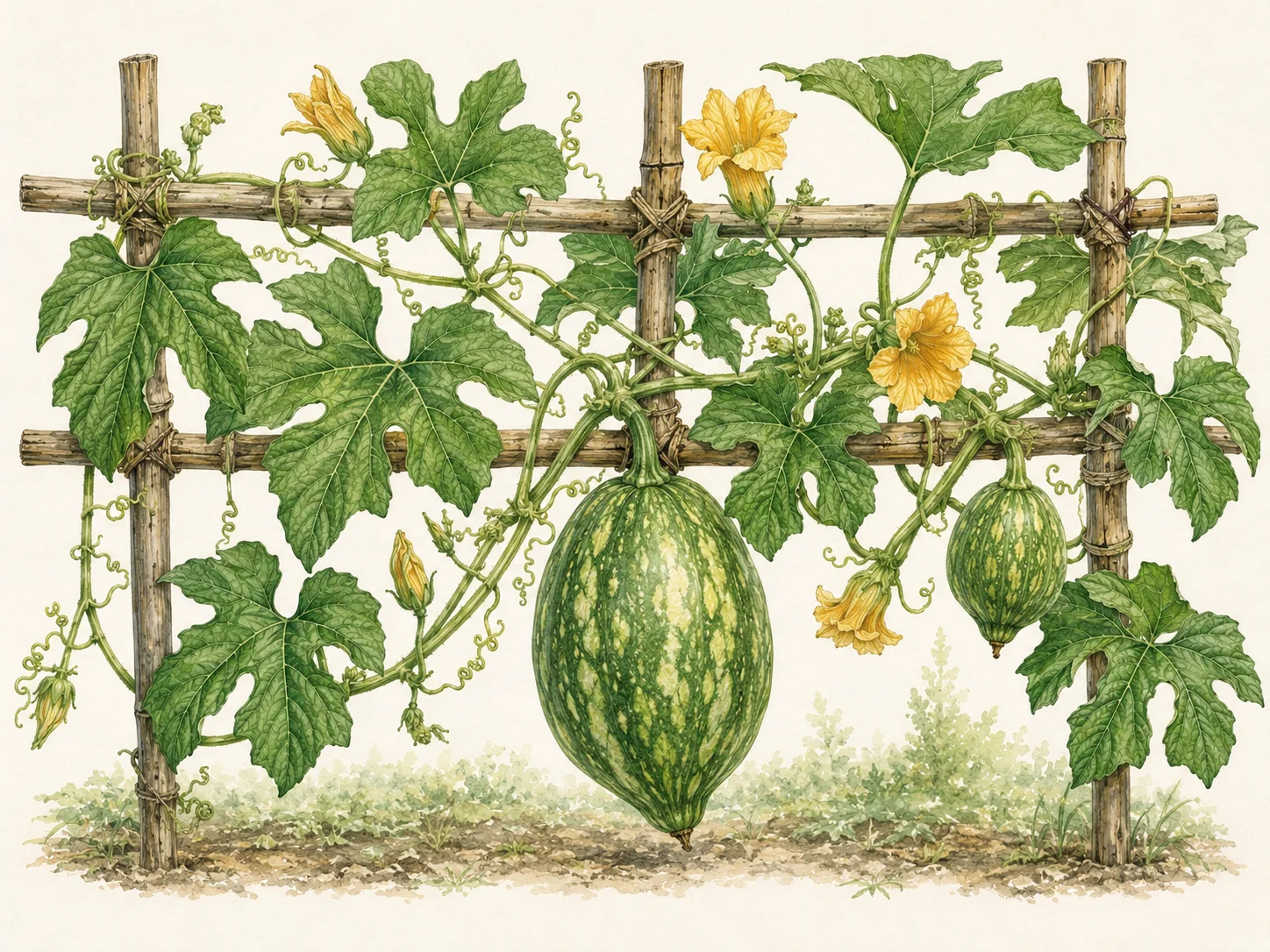
Botanical illustration of a trellised chilacayote or fig-leaf gourd vine with deeply lobed green leaves, curling tendrils, yellow flowers, and two hanging green mottled fruits.

Chilacayote / Fig-Leaf Gourd / Shark Fin Melon (Trellised)

Chilacayote / Fig-Leaf Gourd / Shark Fin Melon

Cucurbita ficifolia

Crop overview

Crop group
Cucurbit
Lifecycle
Annual
Growth habit
Exceptionally Vigorous Annual Vine With Tendrils And Large Storage Fruit

This profile covers Cucurbita ficifolia grown on a dedicated heavy structure for its edible mature fruit, young fruit, seeds or tender shoots. It is commonly called chilacayote, fig-leaf gourd, fig-leaf squash, Malabar gourd, seven-year melon or shark fin melon. It is distinct from ordinary pumpkin, winter squash, watermelon and wax gourd. Mature fruit can become large and heavy, so elevated vertical growing is specialist only. Fruit must be supported in a rigid cradle or allowed to rest on the ground or a platform.

Quick facts

Plant spacing
1.50 m – 3 m
Row spacing
2.40 m
Support height
1.80 m – 3 m
Support strength
Extra Heavy
Support types
Reinforced Pergola, Extra-Heavy Cattle-Panel Arch, Heavy Welded-Wire Arbor, Purpose-Built Fruit Platform, Strong Permanent Fence
Training method
Tendril
Vertical suitability
Specialist
Sun requirement
Full Sun
Days to harvest
100–160 days

Support & training

Training requirements

Guide young vines onto an extra-heavy trellis, pergola or reinforced arch. Spread vigorous growth across the available structure and redirect shoots away from trees, roofs and neighbouring crops. Support every elevated fruit in a rigid cradle attached to structural members. Large fruit is safer resting on the ground, a shelf or a platform. Inspect the structure frequently as the vine becomes heavy.

Pruning requirements

Pruning is optional but often necessary for space control. Redirect or shorten excessive vines and remove dead, damaged, diseased or severely congested growth. Limit the number of large fruit where the season or support capacity is restricted. Avoid removing excessive healthy foliage because it powers fruit development.

Fruit slings

Slings recommended to support heavy fruit.

Growing setup guidance

Container

Minimum size: 100 L

Plants per container: 1

Grow one plant only in a very large, broad and stable container holding at least 100 L (about 26 US gal) of potting mix. Larger is preferable. Provide abundant moisture, regular feeding, excellent drainage and an independently anchored extra-heavy support. Container growing is most practical where vines can spread over a pergola and fruit can rest on a lower platform or the ground. Do not suspend large fruit from a lightweight pot-mounted trellis.

Raised bed

Plant beside a completed extra-heavy structure and allow one plant a large portion of the bed and canopy. Raised beds improve drainage, but the crop still requires consistent water and substantial root volume. Provide platforms or rigid cradles for developing fruit and leave safe harvest access.

In-ground

Plant in fertile, moisture-retentive but freely draining soil beside a permanent or exceptionally strong support. Allow extensive canopy space. Vines can travel far beyond the planting position and climb trees or buildings unless redirected. For the safest vertical system, train the vine overhead while allowing large fruit to develop near ground level or on purpose-built shelves.

Planting, pollination & harvest

Sowing / transplanting

Direct sow after frost danger has passed when soil has warmed to at least about 18°C (65°F). For an earlier crop, start seedlings in individual pots about 3–4 weeks before planting out. Harden gradually and transplant carefully. Install the support before planting. Allow a long growing season for mature hard-rinded fruit.

Pollination

Plants produce separate male and female flowers on the same vine. Bees and other insects normally transfer pollen. The first flowers may be male. Poor pollination causes young fruit to yellow and abort. Hand pollination can improve set where pollinator activity is low. Avoid insecticides while flowers are open.

Warnings

Chilacayote is frost-tender and requires a long season for mature fruit. The vine is exceptionally vigorous and can overwhelm trees, buildings, fences and neighbouring crops. Mature fruit can weigh several kilograms and may collapse supports or cause injury if it falls. Use an extra-heavy frame, support fruit from below and never suspend large fruit above paths or seating areas. Watch for common cucurbit pests and diseases, including aphids, beetles, mites, caterpillars, powdery mildew, downy mildew, anthracnose, viruses and root or fruit rots. Do not eat fruit with a distinctly strong or unpleasant bitter taste.

General notes

Young fruit can be cooked as a squash. Mature fruit develops a very hard rind, white fibrous flesh and black or dark seeds and is used in sweets, preserves, soups and dishes associated with the name shark fin melon. Harvest mature fruit when it has reached full colour, the rind is very hard and the stem begins drying. Cut with a short stem attached and handle carefully to avoid rind damage. Sound mature fruit can store for a long time in cool, dry, ventilated conditions. Storage life varies with maturity and rind condition. Tender shoots and flowers are eaten in some cuisines, but this profile primarily plans for fruit.

Climate guidance

Climate suitability: Possible

Planting season

Plant after frost danger and establish early enough to use the full hot summer.

Wet / dry season

Water deeply during dry periods and ensure rapid drainage after storms.

Soil temperature

Plant into soil at least about 18°C (65°F).

Frost sensitivity

Very frost-tender. Harvest mature or nearly mature fruit before hard frost.

Heat sensitivity

Hot summers support vigorous growth. Extreme drought may cause flower and fruit loss.

Humidity / disease

Hot rain can increase mildew, virus and root-disease pressure.

Sowing guidance

Use transplants or direct sow into warm soil beside the completed structure.

Notes

Limit fruit number so selected fruit can mature before autumn frost.

Ready to plan?

Open the planner with Chilacayote / Fig-Leaf Gourd / Shark Fin Melon (Trellised) preselected.