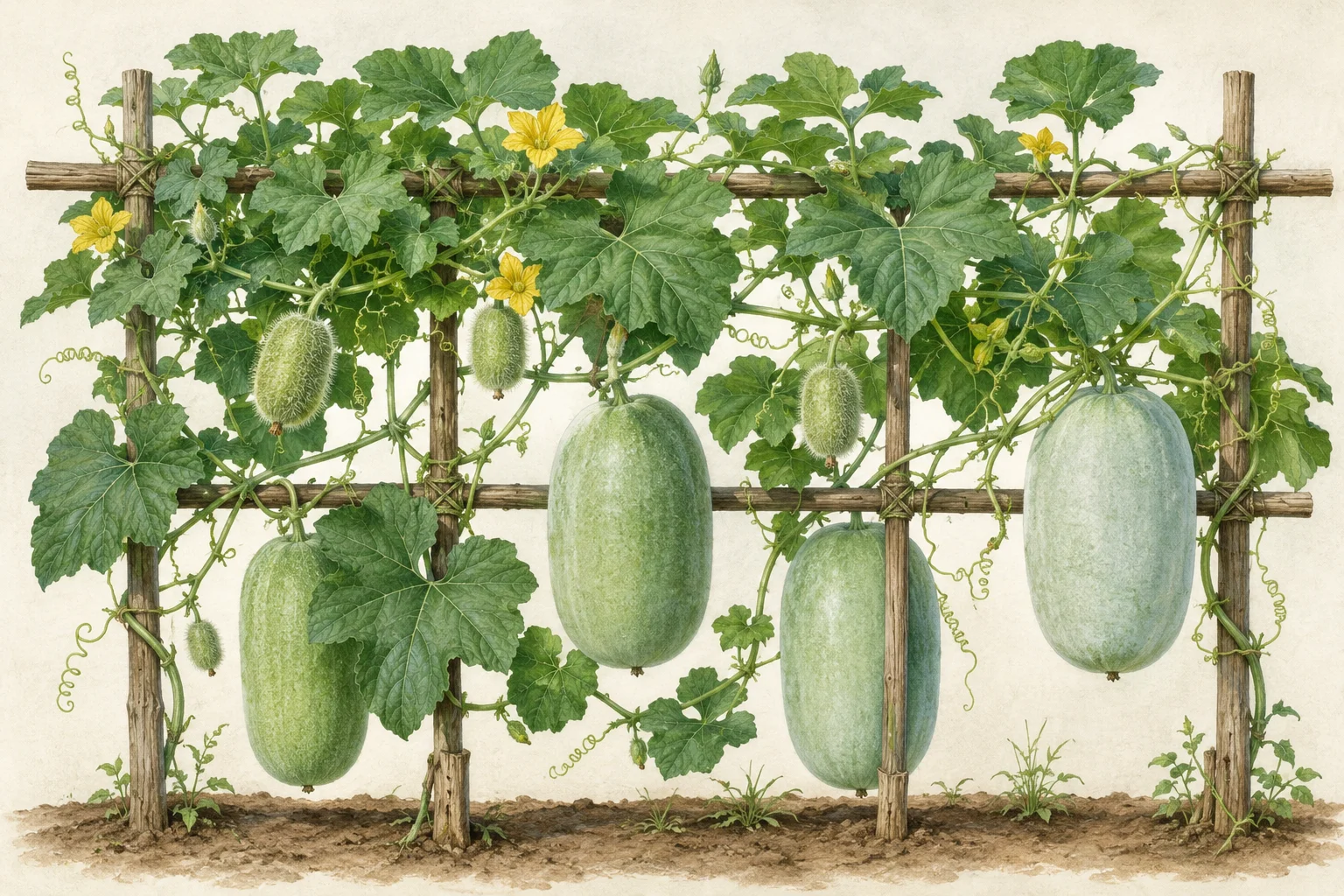
Botanical-style illustration of wax gourd, winter melon and fuzzy melon vines growing across a trellis, with broad green leaves, curling tendrils and several hanging elongated gourds in a horizontal layout.

Wax Gourd / Winter Melon / Fuzzy Melon (Trellised)

Wax Gourd / Winter Melon / Fuzzy Melon

Benincasa hispida

Crop overview

Crop group
Cucurbit
Lifecycle
Annual
Growth habit
Vigorous Warm-Season Tendril Vine Producing Very Heavy Edible Fruit

This profile covers Benincasa hispida grown vertically for either young fuzzy melon or mature wax gourd, also called winter melon. Young fruit is harvested while small, tender and hairy; mature fruit develops a harder rind and a pale waxy bloom and is used as a storage vegetable. It does not cover bottle gourd, luffa, watermelon or other crops called winter melon. Mature wax-gourd fruit can become extremely heavy, so vertical growing is restricted to smaller cultivars or fruit supported by an extra-heavy structure and individual cradle.

Variety examples

Giant Wax, Hybrid Small Round, Round Tong Gwa, Hybrid Wonder Wax, Mokwa, Seven Star Long

Quick facts

Plant spacing
90 cm – 1.80 m
Row spacing
2.10 m
Support height
1.80 m – 2.40 m
Support strength
Extra Heavy
Support types
Reinforced Pergola, Extra-Heavy Cattle-Panel Arch, Heavy Welded-Wire Frame, Overhead-Wire Trellis, Purpose-Built Fruit Platform
Training method
Tendril
Vertical suitability
Specialist
Sun requirement
Full Sun
Days to harvest
70–150 days

Support & training

Training requirements

Guide young vines onto an extra-heavy trellis and spread vigorous shoots across the frame. Secure wandering vines loosely until tendrils attach. Support each fruit early in a strong, breathable sling or rigid cradle attached to the main frame. Enlarge or adjust supports as fruit grows. For giant cultivars, do not suspend fruit above people or fragile structures. Support fruit from below.

Pruning requirements

Pruning is optional. Redirect excessive vines and remove damaged, diseased or badly crowded growth. Where space is limited, retain a manageable number of main vines and fruit. Removing late flowers or surplus fruit can help the remaining crop size and mature. Avoid excessive leaf removal because foliage supports fruit growth and protects fruit from sunscald.

Fruit slings

Slings recommended to support heavy fruit.

Growing setup guidance

Container

Minimum size: 80 L

Plants per container: 1

Grow one compact or small-fruited cultivar in a broad, stable container holding at least 80 L (about 21 US gal) of potting mix. Larger containers are preferable. Provide excellent drainage, consistent moisture, regular feeding and an independently anchored extra-heavy trellis. Support every developing fruit in a strong breathable cradle attached to the structural frame. Container production is most practical for immature fuzzy melon or small-fruited wax-gourd cultivars.

Raised bed

Plant beside a completed extra-heavy trellis or overhead frame. Raised beds are useful during heavy rain, but the crop still requires substantial root volume and consistent moisture. Leave access to fit and inspect fruit cradles. Do not allow mature fruit to hang unsupported.

In-ground

Plant in warm, fertile, moisture-retentive but freely draining soil beside a dedicated support. Allow ample root and canopy space. For very large cultivars, train vines vertically but allow fruit to rest on the ground, a shelf or a purpose-built platform rather than suspending it high overhead. Maintain even moisture during flowering and fruit enlargement and avoid saturated soil.

Planting, pollination & harvest

Sowing / transplanting

Direct sow after frost danger has passed when soil is thoroughly warm, preferably at least about 18°C (65°F). Sow approximately 4–5 cm deep where heavy-textured soil does not crust. For an earlier crop, start seedlings in individual pots about 3–4 weeks before planting out. Harden gradually and transplant carefully after nights become warm. Install the permanent support before sowing or transplanting.

Pollination

Wax gourd produces separate male and female flowers on the same vine. Bees and other insects transfer pollen. The first flowers are often male. Poor pollination can cause young fruit to yellow and abort. Hand pollination may help where pollinator activity is low. Avoid insecticide use while flowers are open.

Warnings

Wax gourd is frost-tender and needs a long warm season, particularly for mature storage fruit. Mature fruit may weigh many kilograms and can tear vines, collapse trellises or injure people if it falls. Use an extra-heavy structure, support every suspended fruit and inspect anchors and cradles regularly. Watch for fruit flies, aphids, mites, beetles, caterpillars, powdery mildew, downy mildew, anthracnose, gummy stem blight, bacterial disease, viruses and root or fruit rots. Do not eat fruit with a distinctly strong or unpleasant bitter taste. Spit it out and discard it.

General notes

For fuzzy melon, harvest young fruit while the skin is hairy and tender and before the seeds harden. Cultivar and intended cuisine determine the preferred size. For mature winter melon or wax gourd, harvest when the rind is hard, the fruit has reached full size and the surface has developed its mature pale waxy bloom where characteristic. Cut with a short stem attached. Cure only if recommended for the cultivar, then store sound mature fruit in a cool, dry, well-ventilated place. Immature fuzzy melon does not have the same storage life. Handle mature fruit carefully because rind damage reduces storage life.

Climate guidance

Climate suitability: Possible

Planting season

Plant after frost danger and establish early enough to use the full hot summer.

Wet / dry season

Water consistently during flowering and fruit growth and ensure rapid drainage after storms.

Soil temperature

Plant into soil at least about 18°C (65°F).

Frost sensitivity

Very frost-tender. Harvest all usable fruit before autumn frost.

Heat sensitivity

Hot summers suit the crop, but extreme heat and drought can cause flower or fruit abortion.

Humidity / disease

Hot rainy periods increase mildew, blight and fruit-rot pressure.

Sowing guidance

Use transplants or direct sow into thoroughly warm soil beside the completed support.

Notes

Small mature cultivars are more likely to finish than giant winter melons.

Ready to plan?

Open the planner with Wax Gourd / Winter Melon / Fuzzy Melon (Trellised) preselected.