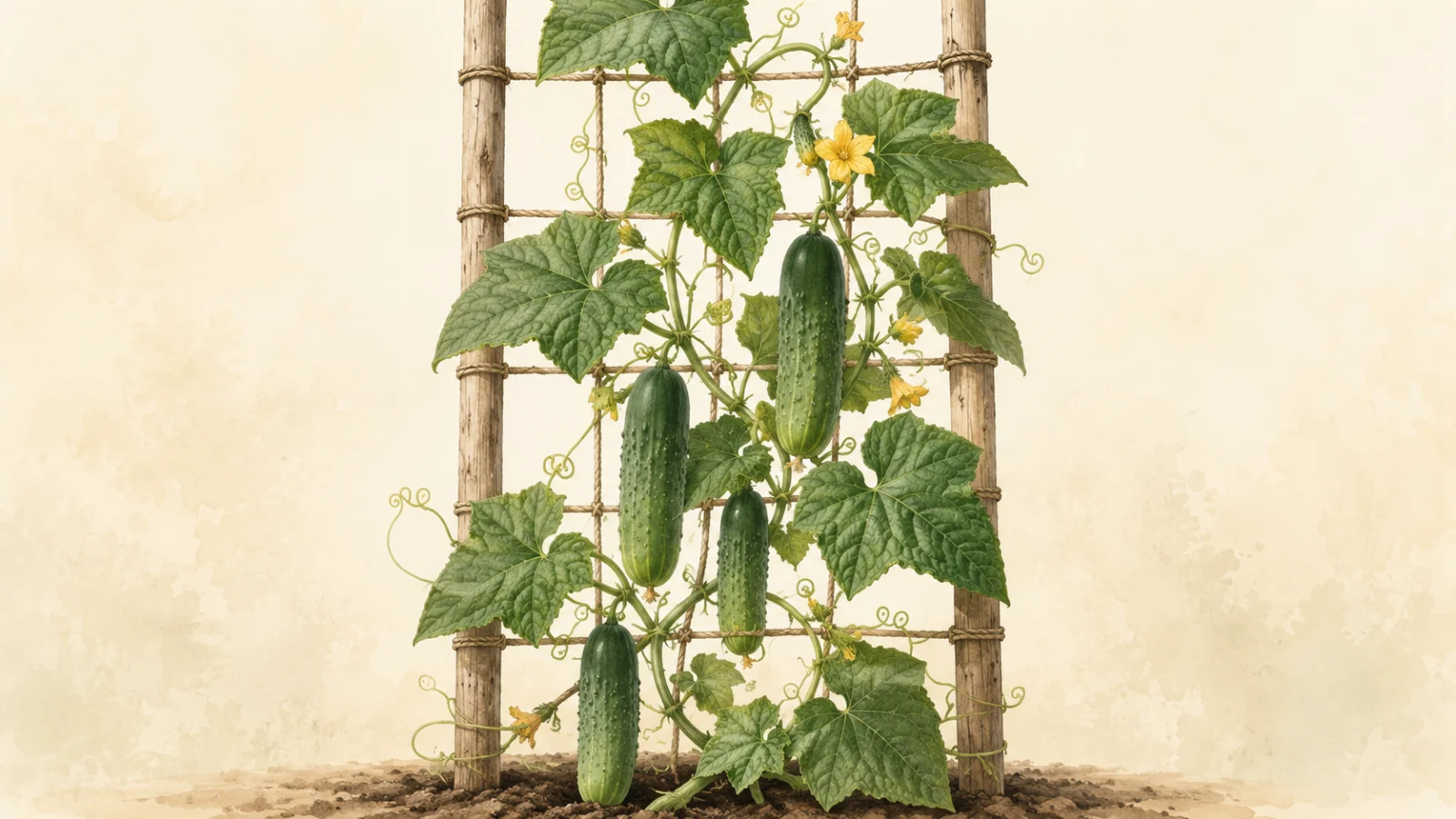
Vining Cucumber
Cucumber
Cucumis sativus
Crop overview
- Crop group
- Cucurbit
- Lifecycle
- Annual
- Growth habit
- Climbing Vine
This profile covers vining cucumbers trained vertically on a trellis, mesh or fence. It does not cover compact bush cucumber varieties or specific cultivars where the seed packet gives different spacing or growing instructions.
Quick facts
- Plant spacing
- 20 cm – 30 cm
- Row spacing
- 90 cm
- Support height
- 1.20 m – 1.80 m
- Support strength
- Medium
- Support types
- Mesh Trellis, Trellis Netting, Wire Fence, A-Frame Trellis
- Training method
- Tendril
- Vertical suitability
- Recommended
- Sun requirement
- Full Sun
- Days to harvest
- 50–70 days
Support & training
Training requirements
Guide young vines onto the support until their tendrils attach. Check regularly and redirect wandering vines as needed.
Pruning requirements
Pruning is generally optional. Remove damaged or diseased leaves and prune lightly only where needed to improve airflow or control growth.
Growing setup guidance
Container
Minimum size: 30 L
Plants per container: 1
Grow one plant in a container holding at least 30 L (about 8 US gal) of potting mix. Larger containers are preferable in hot, dry or windy climates because they hold moisture more evenly and are less likely to tip. Provide excellent drainage and secure the trellis firmly. Check moisture frequently, as vertically grown container cucumbers can dry out quickly.
Raised bed
Plant beside a sturdy support positioned so it does not heavily shade shorter crops. Use fertile, moisture-retentive but well-drained soil. Allow access for training, harvesting and airflow around the vines.
In-ground
Install the support before the vines begin running. Grow in fertile, moisture-retentive but well-drained soil. Water at soil level where possible and leave enough access for training and frequent harvesting.
Planting, pollination & harvest
Sowing / transplanting
Direct sow after frost danger has passed and the soil has warmed to at least 21°C (70°F). In short-season climates, start seedlings indoors about 3–4 weeks before planting out. Harden seedlings off and transplant carefully, as cucumbers dislike root disturbance.
Pollination
Most traditional cucumber varieties produce separate male and female flowers on the same plant and rely on bees or other insects for pollination. Some gynoecious varieties need a compatible pollen-producing cucumber nearby. Parthenocarpic varieties can produce fruit without pollination. Check the seed packet for the variety’s flowering and pollination type.
Warnings
Cucumbers are frost-tender and grow poorly in cold soil. Poor pollination can cause low fruit set or misshapen fruit. Watch for cucumber beetles, bacterial wilt, powdery mildew and other foliar diseases. Avoid applying insecticides while flowers are open and pollinators are active.
General notes
Harvest cucumbers frequently while they are firm and before they become oversized, yellow or heavily seeded. Leaving mature fruit on the vine can reduce continued production. Avoid handling or harvesting vines while the leaves are wet, as this can spread disease.
Climate guidance
Climate suitability: Recommended
Planting season
Plant in spring after frost danger has passed and the soil has warmed. Sow through early summer where the remaining frost-free season is long enough for the chosen variety to mature.
Wet / dry season
During hot, dry periods, irrigate deeply and consistently. Mulch after the soil has warmed to reduce moisture loss.
Soil temperature
Direct sow when the soil is at least 21°C (70°F). Waiting for genuinely warm soil usually gives faster, more even establishment than planting early into cold ground.
Frost sensitivity
Very frost-tender. Do not plant outdoors while frost remains likely.
Heat sensitivity
Cucumbers tolerate warm summers but need reliable moisture. Extreme heat combined with dry soil can reduce growth, fruit quality and continued production.
Humidity / disease
Warm, wet weather can encourage foliar diseases. Provide airflow, avoid crowding and water at soil level where possible.
Sowing guidance
Direct sow after the final frost once soil has warmed. Transplants may be started indoors about 3–4 weeks earlier but should be planted out carefully. A later sowing may be possible where enough warm weather remains before autumn frost.
Notes
Do not rush spring planting simply because daytime air temperatures feel warm; cold soil can delay germination and establishment.