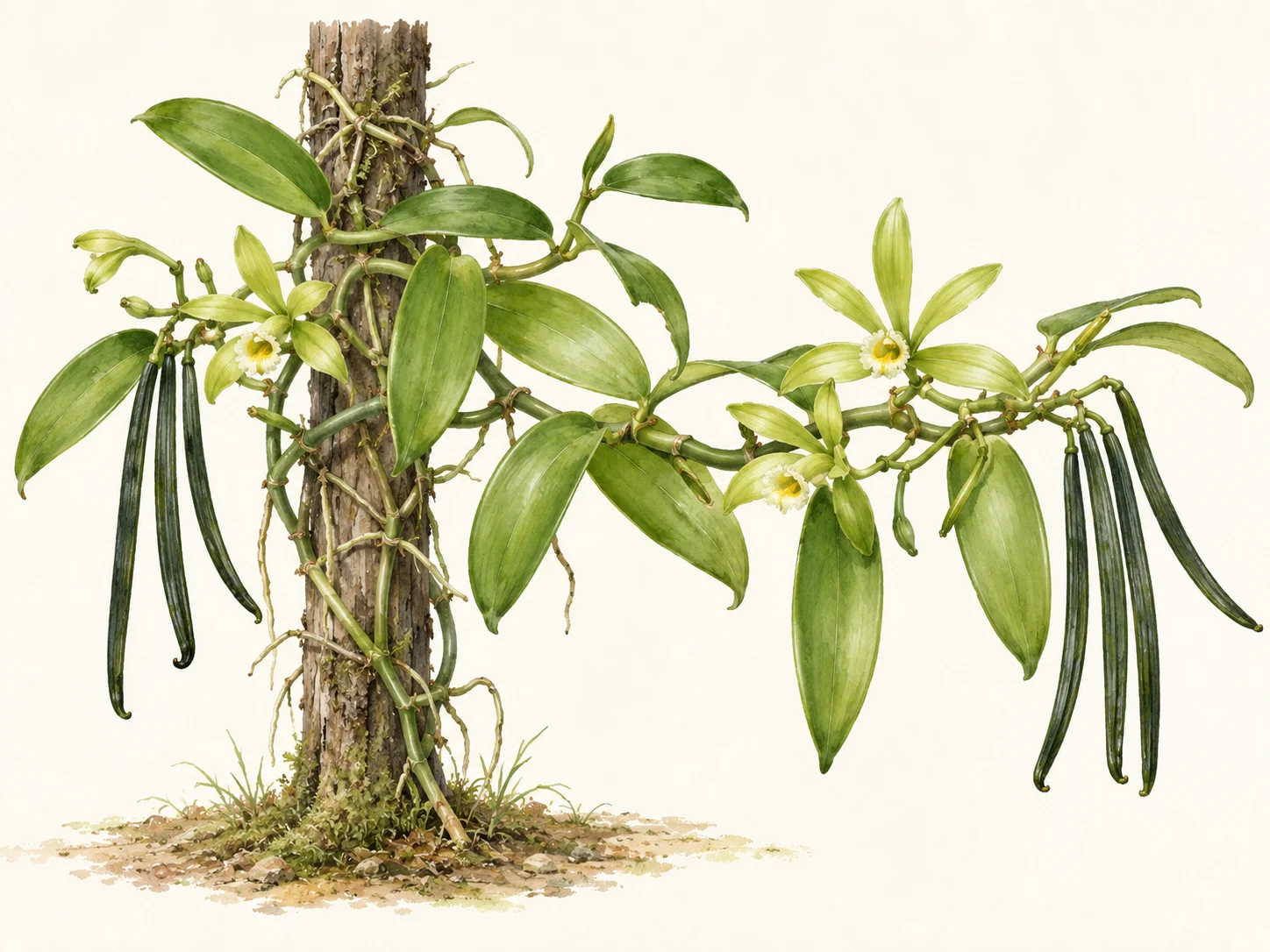
Vanilla Bean Orchid
Vanilla Bean Orchid / Vanilla Vine
Vanilla planifolia
Crop overview
- Crop group
- Perennial Spice Vine
- Lifecycle
- Perennial
- Growth habit
- Fleshy Evergreen Hemi-Epiphytic Orchid Vine With Aerial Roots That Cling To Trees, Posts Or Trellises
Covers true commercial vanilla, Vanilla planifolia, grown for cured aromatic pods. It is a specialist tropical crop requiring shade, looping and usually hand pollination.
Variety examples
Vanilla planifolia, Mansa-type vanilla, Variegated ornamental forms
Quick facts
- Plant spacing
- 1 m – 3 m
- Row spacing
- 2.50 m
- Support height
- 1.50 m – 2 m
- Support strength
- Medium
- Support types
- Shade-House Post And Wire Trellis, Rough-Barked Tutor Tree, Low Horizontal Trellis, Orchid Support Frame
- Training method
- Tying
- Vertical suitability
- Specialist
- Sun requirement
- Partial Shade
Support & training
Training requirements
Loop long vines over the trellis and back toward the mulch so additional terrestrial roots form. Keep flowering vines low enough to inspect and hand-pollinate each morning.
Pruning requirements
Loop and tip mature healthy vines before the dry or rest season to encourage flowering. Remove diseased sections and cycle in clean replacement vines when old plants decline.
Growing setup guidance
Container
Minimum size: 30 L
Plants per container: 1
Use a coarse, organic, extremely free-draining orchid-style substrate under bright filtered light. Provide a rough support and room to loop vines downward.
Raised bed
Only suitable in a shaded, humid, frost-free bed rich in loose organic mulch, with a support no higher than about 2 m for pollination and harvest access.
In-ground
Grow under filtered light on tutor trees or a low trellis. Keep terrestrial roots in a deep organic mulch layer and avoid waterlogged soil.
Planting, pollination & harvest
Sowing / transplanting
Plant healed cuttings rather than seed. Longer cuttings establish and flower sooner. Bury or mulch one lower node and tie the upper vine gently to its support.
Pollination
Vanilla planifolia is generally self-compatible, but flowers last only one day and natural pollination is unreliable. Hand pollinate in the morning, commonly between 6 am and noon.
Warnings
A specialist crop. Frost, chilling, waterlogging and Fusarium root or stem rot can kill vines. Green pods are not ready-to-use vanilla and require careful curing after harvest.
General notes
Vanilla may take several years to flower. Pollinated pods then take many months to mature.
Climate guidance
Climate suitability: Not recommended
Planting season
Not suitable outdoors
Wet / dry season
Protected culture must avoid waterlogging
Soil temperature
Winter root-zone warmth is essential
Frost sensitivity
Freezing temperatures can kill vines
Heat sensitivity
Hot dry air can desiccate aerial roots
Humidity / disease
Protected culture must avoid stagnant wet conditions
Sowing guidance
Use a heated greenhouse with filtered light
Notes
Large seasonal temperature swings make outdoor production unsuitable.