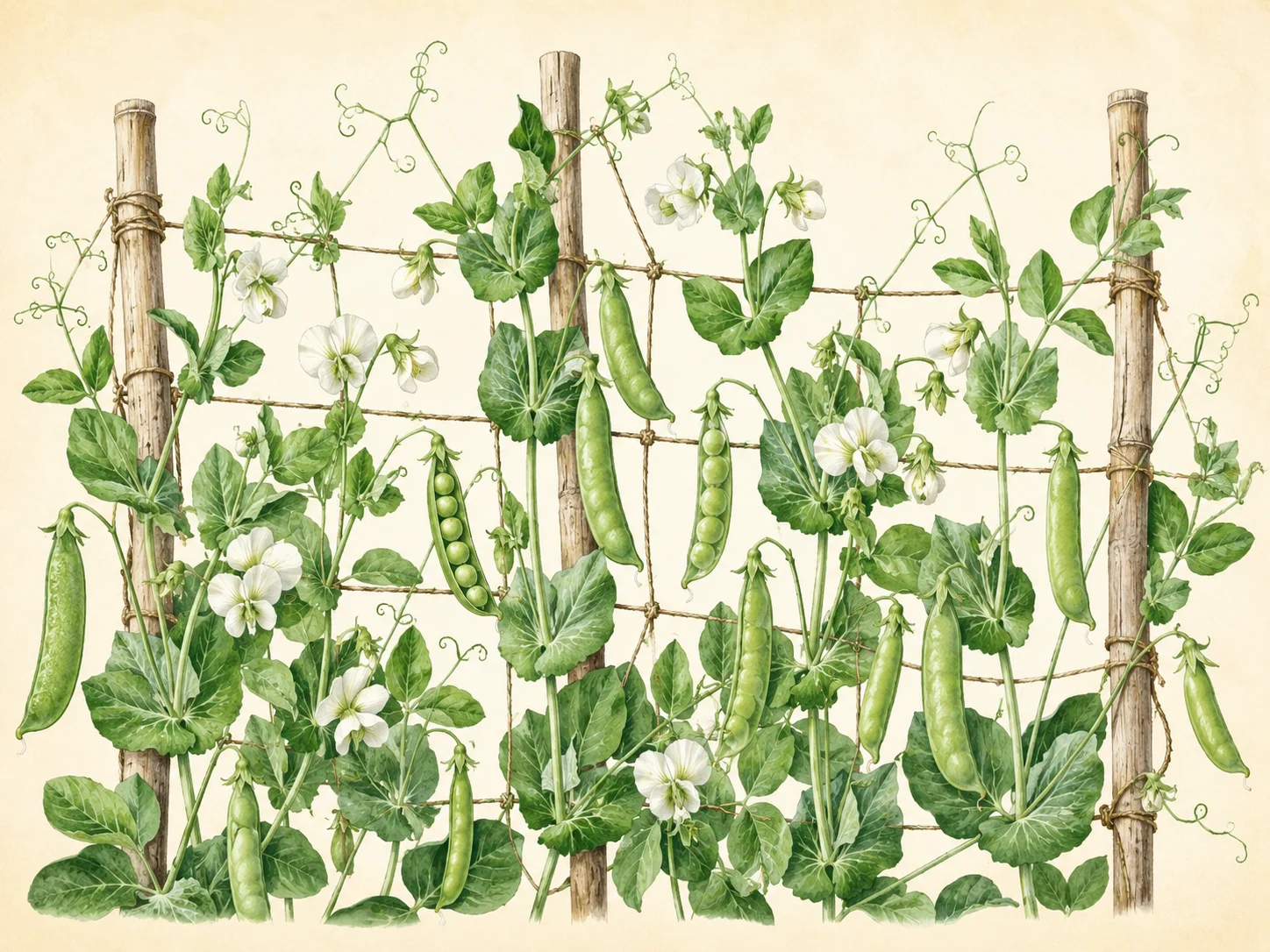
Botanical watercolor illustration of a tall climbing pea (Pisum sativum) growing up a rustic wooden trellis, with green vines, tendrils, white flowers, and mature pea pods against a soft cream background.

Tall Climbing Pea

Garden Pea

Pisum sativum

Crop overview

Crop group
Legume
Lifecycle
Annual
Growth habit
Cool-Season Climbing Vine With Tendrils

This profile covers tall vining garden peas grown for shelling peas, edible snap pods or snow-pea pods and trained vertically on a trellis. It does not cover dwarf or bush peas, field peas, chickpeas, cowpeas or ornamental sweet peas. Harvest timing and pod stage vary between shelling, snap and snow-pea cultivars, so follow the seed packet where its advice differs.

Variety examples

Sugar Snap, Super Sugar Snap, Alderman, Tall Telephone, Oregon Giant

Quick facts

Plant spacing
5 cm – 15 cm
Row spacing
45 cm
Support height
1.50 m – 2.40 m
Support strength
Light
Support types
Trellis Netting, Pea Mesh, Wire Fence, Twiggy Branches, Vertical String Trellis
Training method
Tendril
Vertical suitability
Recommended
Sun requirement
Full Sun
Days to harvest
55–75 days

Support & training

Training requirements

Install the support before sowing. Guide young shoots toward the trellis until their tendrils attach. Closely spaced plants will often cling to one another as well as the support.

Pruning requirements

Pruning is generally unnecessary. Remove badly damaged or diseased growth where practical, but avoid heavy pruning.

Growing setup guidance

Container

Minimum size: 20 L

Plants per container: 6

Grow up to six plants in a wide container holding at least 20 L (about 5 US gal) of potting mix. Space them around the base of firmly anchored mesh, twiggy supports or a narrow trellis. Use excellent drainage and keep the soil evenly moist but never waterlogged. Larger containers help keep the roots cooler and moist for longer as the weather warms.

Raised bed

Sow in a single row along an installed trellis. Peas have relatively shallow roots, so weed carefully and maintain even moisture during flowering and pod development. Position the trellis where it will not heavily shade later warm-season crops.

In-ground

Direct sow beside the completed support as soon as the soil is workable and conditions are cool. Avoid compacted or waterlogged ground. Do not cultivate deeply around established plants because their roots are easily damaged.

Planting, pollination & harvest

Sowing / transplanting

Direct sow as soon as the soil is workable and consistently at least 4°C (40°F). Germination is faster and more reliable in soil around 13–18°C (55–65°F). Peas generally prefer direct sowing; if using seedlings, transplant them young and handle the roots carefully.

Pollination

Garden peas are generally self-fertile and normally produce pods without another variety nearby. Pollinating insects may visit the flowers but are not usually required for pod set.

Warnings

Peas prefer cool weather and decline when temperatures remain above about 27°C (80°F). Hot days and warm nights can cause flower drop and poor pod set. Avoid waterlogged soil, which can cause seed rot and root disease. Watch for aphids, powdery mildew, birds, slugs and seedling damage.

General notes

Harvest frequently because mature peas lose sweetness and tenderness quickly. Pick shelling peas when the seeds are plump but still tender, snow peas while the pods are full-sized but still flat, and snap peas when the pods are plump, crisp and juicy. Hold the vine while picking to avoid tearing it from the support.

Climate guidance

Planting season

Sow from late winter through early spring while conditions are cool. In areas with mild autumns and winters, an autumn sowing may also succeed if the site drains well and severe freezes are uncommon.

Wet / dry season

In winter-rainfall areas, prioritise drainage. During dry spring weather, irrigate consistently through flowering and harvest.

Soil temperature

Seeds can germinate above 4°C (40°F), with faster emergence around 13–18°C (55–65°F). Cool soil is suitable; cold waterlogged soil is not.

Frost sensitivity

Young vines tolerate light frost, but hard freezes and frost during flowering can damage plants and reduce pod set.

Heat sensitivity

Finish the main crop before prolonged temperatures above about 27°C (80°F). Hot weather makes pods tougher and less sweet and may cause flowers to drop.

Humidity / disease

Mild wet winters and springs can encourage root rot, moulds and foliar disease. Use well-drained soil, open trellising and appropriate spacing.

Sowing guidance

Direct sow beside the support. Where autumn sowing is locally reliable, choose a hardy cultivar and avoid low, waterlogged ground.

Notes

A spring crop and a separate autumn crop may both be possible where summers are too hot for peas but winters are relatively mild.

Ready to plan?

Open the planner with Tall Climbing Pea preselected.