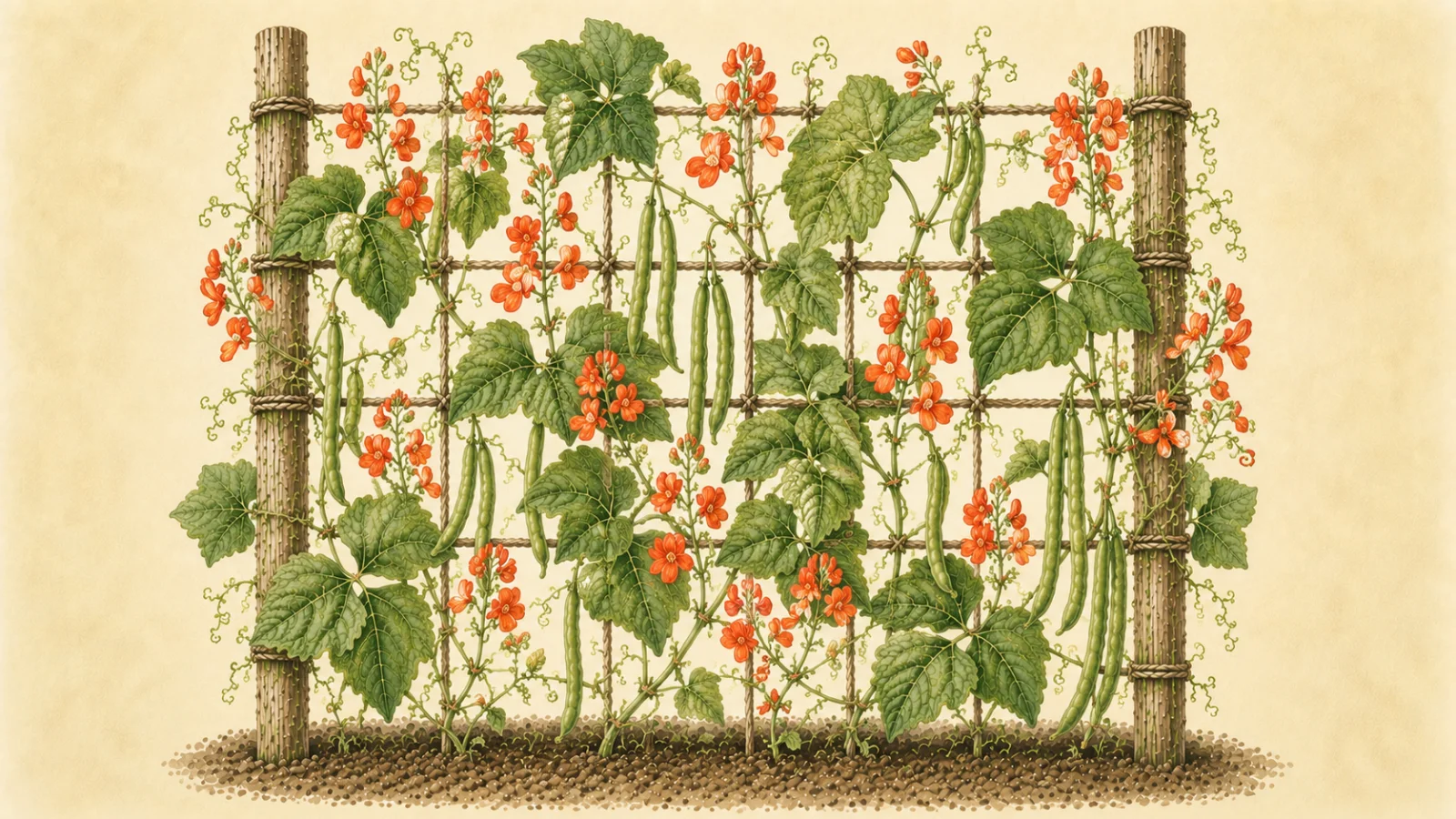
Botanical watercolor illustration of scarlet runner bean (Phaseolus coccineus) growing vertically on a rustic wooden trellis, with lush green trifoliate leaves, vibrant scarlet flowers, curling tendrils, and green bean pods in various stages of development against a soft cream background.

Scarlet Runner Bean / Runner Bean

Phaseolus coccineus

Crop overview

Crop group
Legume
Lifecycle
Perennial
Growth habit
Vigorous Cool-Summer Twining Vine With Showy Flowers And Edible Pods

This profile covers climbing cultivars of Phaseolus coccineus grown vertically for their tender immature pods, edible flowers, fresh shell beans or mature dry beans. It includes red-, white-, pink- and bicoloured flowering runner beans. It does not cover dwarf runner-bean cultivars, ordinary pole snap beans, yardlong beans, lima beans or other climbing bean species. Follow cultivar-specific guidance where pod texture, maturity or heat tolerance differs. Scarlet runner bean is a tender, short-lived perennial that develops tuberous roots, but it is commonly cultivated as an annual vegetable outside mild climates. It does not cover dwarf runner-bean cultivars, ordinary common pole beans, yardlong beans or runner-bean hybrids containing substantial Phaseolus vulgaris parentage. Such hybrids may differ in heat tolerance, fertility and pod characteristics.

Variety examples

Scarlet Emperor, Painted Lady, Lady Di, Polestar, Sunset, White Emergo

Quick facts

Plant spacing
10 cm – 20 cm
Row spacing
90 cm
Support height
1.80 m – 3 m
Support strength
Heavy
Support types
Bean Teepee, Tall String Trellis, Heavy Trellis Netting, Sturdy Wire Fence, Reinforced Garden Arch, A-Frame Trellis
Training method
Twining
Vertical suitability
Recommended
Sun requirement
Full Sun
Days to harvest
65–85 days

Support & training

Training requirements

Install a tall, sturdy support before sowing or transplanting. Guide young stems toward poles, strings, wire or mesh and loosely secure them until they begin twining. Redirect shoots across unused support space and tie in stems that become loose. Once vines reach the top of the structure, pinch or cut off the growing tips to encourage lower side growth, keep pods within reach and reduce top-heaviness.

Pruning requirements

Routine pruning is generally unnecessary apart from controlling the top of the vine. Pinch out growing tips once they reach the top of the support and redirect vigorous side shoots where necessary. Remove damaged, diseased or severely crowded growth. Avoid heavy pruning during flowering and pod production. Frequent harvesting is more important than pruning for maintaining continued flowering and pod development.

Growing setup guidance

Container

Minimum size: 50 L

Plants per container: 1

Grow one climbing plant in a broad, stable container holding at least 50 L (about 13 US gal) of potting mix. Larger containers may support more plants, but they must provide enough soil volume and weight to remain stable beneath a tall trellis. Runner beans need consistent moisture, particularly during flowering and pod enlargement. Check containers frequently during warm, windy weather and never allow the potting mix to dry out repeatedly. Provide a firmly anchored support at planting time. Feed container-grown plants moderately once flowering begins, but avoid excessive nitrogen that encourages foliage at the expense of pods.

Raised bed

Sow or transplant beside a completed tall support. Enrich the bed with organic matter so the soil retains moisture while remaining freely drained. Runner beans crop best when moisture remains consistent during flowering and pod development. Leave clear access for harvesting every two or three days. Position the trellis where the vigorous canopy will not excessively shade shorter crops unless summer shade is intentional.

In-ground

Plant in fertile, moisture-retentive but well-drained soil beside a tall, firmly anchored support. Add organic matter before planting and mulch once plants are established. Water deeply during dry periods, especially from flowering through pod development. Avoid excessive nitrogen fertiliser because legumes can form nitrogen-fixing root nodules and overfeeding may produce lush growth with fewer pods. In a suitably mild climate, tuberous roots may survive and reshoot. Protect or remove them according to whether perennial regrowth is wanted.

Planting, pollination & harvest

Sowing / transplanting

Direct sow after frost danger has passed when the soil has reached at least about 12°C (54°F). Plant seed approximately 5 cm deep and place supports beside the planting position at sowing time. For an earlier crop in cold districts, start seeds in individual pots a few weeks before the expected last frost. Keep seedlings in a bright place above about 12°C, harden them gradually and transplant after frost danger has passed. Runner-bean seed produces underground cotyledons, so avoid disturbing the young root system. Protect emerging seedlings from slugs, snails, rabbits and other browsing animals.

Pollination

Runner-bean flowers attract bees and other pollinating animals, and insect visits can assist reliable pod set. Provide pollinator access and avoid applying insecticides while flowers are open. Runner beans readily cross-pollinate with other Phaseolus coccineus varieties. Seed saved from nearby varieties may not remain true to type. Some modern runner-bean or runner/French-bean hybrid cultivars are described as self-fertile, but this broad profile assumes that pollinator activity remains beneficial. Hot weather, dry roots, strong winds and insufficient pollinator activity can all contribute to flower drop or poor pod set.

Warnings

Scarlet runner bean is frost-tender even though it tolerates cooler growing conditions than many other beans. Frost kills the foliage. Pod set declines during hot weather, and pollen may become poorly viable at temperatures above approximately 32°C (90°F). Maintain consistent moisture and expect production to pause during prolonged heat. Watch for slugs, snails, aphids, mites, bean flies, caterpillars, beetles, rust, powdery mildew, bacterial diseases, root rots and bean viruses. Mature runner-bean seeds contain lectins and must not be eaten raw or undercooked. Cook fresh shell beans and dried beans thoroughly according to reliable food-safety guidance. Young pods are generally eaten cooked, particularly once they become large or coarse.

General notes

Harvest green pods while they are young, flexible and easy to snap, before the skins become coarse and the seeds swell prominently. The ideal size varies by cultivar and may range from approximately 10–25 cm long. Pick every two or three days during active production. Allowing pods to mature on the plant reduces further flowering and pod development. Runner-bean pods are often broader and rougher than common green beans and may be sliced before cooking. When pods become too fibrous for snap-bean use, the immature seeds may be shelled and cooked. For dry beans or seed saving, leave mature pods on the vine until dry where weather permits. If frost or persistent rain threatens, harvest mature pods and finish drying them under cover.

Climate guidance

Climate suitability: Possible

Planting season

Plant in spring after frost danger has passed. Aim for flowering and early pod production before the hottest part of summer, with renewed production possible as temperatures moderate toward autumn.

Wet / dry season

Water deeply and consistently during flowering and pod enlargement. Dry roots during hot weather increase flower drop and poor pod set.

Soil temperature

Direct sow once soil reaches at least about 12°C (54°F). Earlier sowing is possible than for tropical beans, but avoid cold saturated ground.

Frost sensitivity

Frost-tender. Treat the crop as an annual and harvest remaining pods before autumn frost.

Heat sensitivity

Temperatures above approximately 32°C (90°F) can reduce pollen viability and pod set. Plants may continue growing but pause production until cooler weather returns.

Humidity / disease

Hot rainy periods may increase rust, mildew, bacterial disease, aphid and mite pressure. Maintain airflow and avoid waterlogging.

Sowing guidance

Direct sow after frost or transplant seedlings started a few weeks earlier. Install supports before planting.

Notes

Do not remove healthy plants merely because they stop setting pods during a heatwave. Maintain moisture and continue harvesting; flowering and pod production may resume as weather cools.

Ready to plan?

Open the planner with Scarlet Runner Bean / Runner Bean preselected.