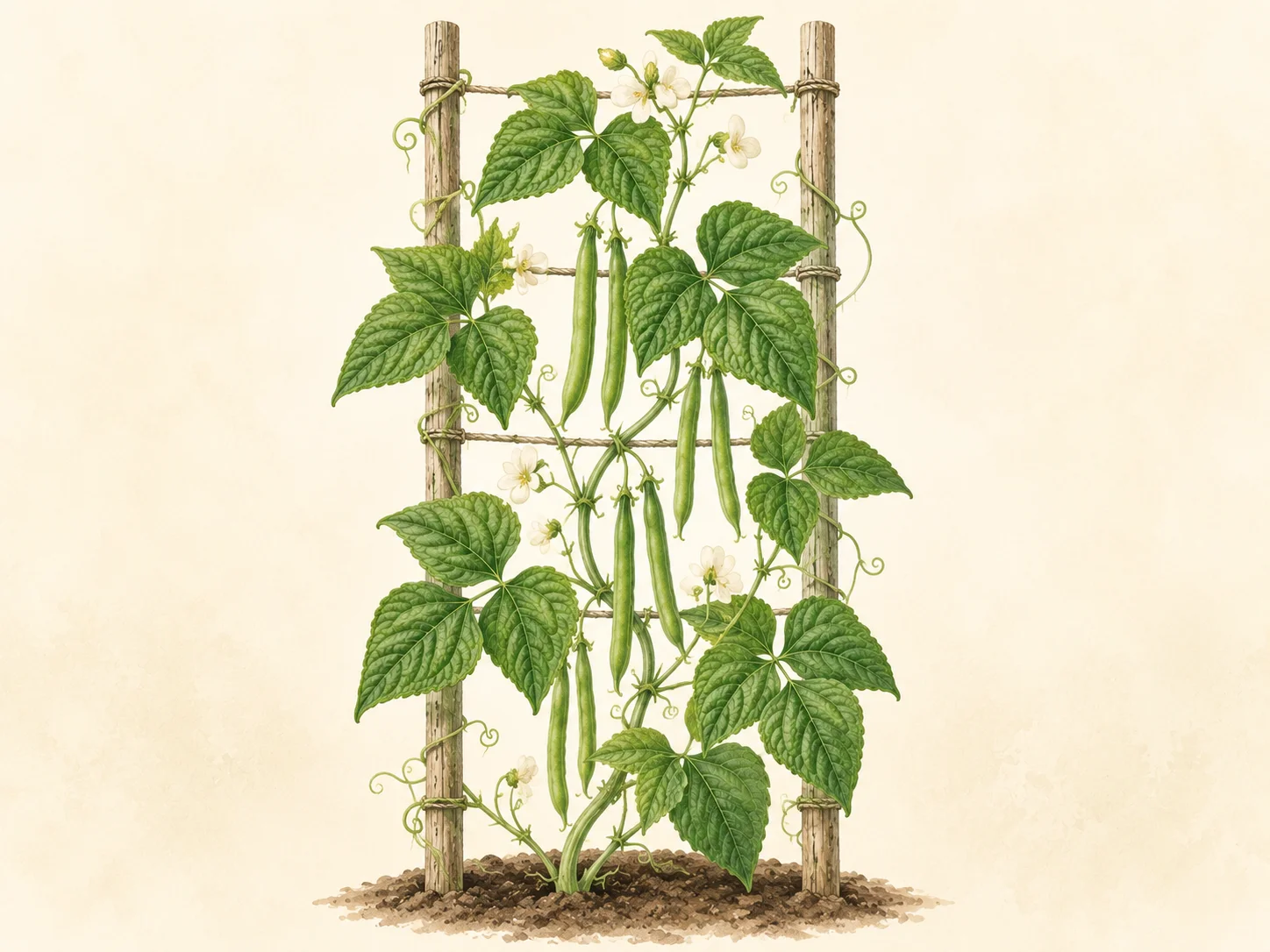
Pole snap bean vine climbing a rustic wooden trellis, with green bean pods, white flowers and broad green leaves.

Pole Snap Bean

Pole Bean

Phaseolus vulgaris

Crop overview

Crop group
Legume
Lifecycle
Annual
Growth habit
Twining Climbing Vine

This profile covers climbing common beans grown mainly for tender snap pods. It does not cover bush beans, half-runner beans, pole lima beans, scarlet runner beans, yardlong beans or varieties grown primarily for dried seed. Follow the seed packet where cultivar-specific spacing or maturity information differs.

Variety examples

Kentucky Wonder, Blue Lake Pole, Fortex, Romano Pole

Quick facts

Plant spacing
10 cm – 20 cm
Row spacing
75 cm
Support height
1.80 m – 2.40 m
Support strength
Medium
Support types
Trellis Netting, Vertical String Trellis, Wire Fence, Teepee, Arch Trellis
Training method
Twining
Vertical suitability
Recommended
Sun requirement
Full Sun
Days to harvest
60–75 days

Support & training

Training requirements

Install the support before sowing or immediately afterward. Guide young vines onto the support until they begin twining upward. Pole beans climb most readily around poles, strings or narrow vertical supports rather than horizontal wires alone.

Pruning requirements

Pruning is generally unnecessary. Remove damaged or badly diseased growth where needed, but avoid heavy pruning that reduces productive foliage.

Growing setup guidance

Container

Minimum size: 20 L

Plants per container: 4

Grow up to four plants in a wide container holding at least 20 L (about 5 US gal) of potting mix. Arrange the plants around a firmly anchored teepee or along a narrow trellis. Larger containers are preferable in hot, dry or windy conditions because they retain moisture more evenly and are less likely to tip. Provide excellent drainage and check moisture frequently during flowering and pod production.

Raised bed

Install the support before sowing and position it where the tall vines will not heavily shade shorter crops. Sow along the base of the trellis, maintain consistent moisture during flowering and pod development, and leave enough access for regular harvesting.

In-ground

Sow directly beside a sturdy support after the soil has warmed. Avoid waterlogged ground and excessive nitrogen fertiliser, which can encourage leafy growth at the expense of pods. Rotate beans with unrelated crops where practical and avoid working among wet plants.

Planting, pollination & harvest

Sowing / transplanting

Direct sow after frost danger has passed and the soil has warmed to at least 18°C (65°F). Plant seeds about 2.5 cm (1 in) deep, or follow the seed packet. Beans generally establish best when direct sown because seedlings do not benefit greatly from transplanting and seeds may rot in cold, wet soil.

Pollination

Common pole beans are generally self-fertile and do not require another variety for pollination. Pollinating insects may visit the flowers, but a single compatible variety can normally produce pods.

Warnings

Pole beans are frost-tender. Seeds may rot in cold, wet soil. Very hot weather during flowering can temporarily reduce pod set. Avoid excessive nitrogen fertiliser, overhead watering and handling wet foliage, as these can contribute to excessive leaf growth or disease problems.

General notes

Harvest snap beans every day or two while the pods are young, firm and smooth and before the seeds inside become noticeably swollen. Frequent picking encourages continued flowering and pod production. Pole beans usually crop over a longer period than bush beans.

Climate guidance

Planting season

Plant in spring after frost danger has passed and soil has warmed. Aim for strong establishment before the hottest, driest part of summer. A late-summer crop may be possible where warm autumn weather is reliable.

Wet / dry season

Provide dependable irrigation during the dry season and mulch once the soil is warm. Ensure good drainage during wetter spring conditions.

Soil temperature

Direct sow when soil is at least 16°C (60°F), preferably 18°C (65°F) or warmer. Do not sow into cold, waterlogged winter soil.

Frost sensitivity

Frost-tender. Wait until nights are reliably mild.

Heat sensitivity

Prolonged extreme heat, hot winds and dry soil can cause blossom and young-pod drop. Pole beans may begin setting pods again once conditions moderate.

Humidity / disease

Dry summers may reduce some foliar diseases, although rust and powdery mildew can still occur. Maintain airflow and avoid unnecessary wetting of foliage.

Sowing guidance

Direct sow into warm soil beside an installed support. In very hot inland areas, time later crops so flowering avoids the fiercest heat.

Notes

A site protected from strong drying winds may improve pod set and reduce water stress.

Ready to plan?

Open the planner with Pole Snap Bean preselected.