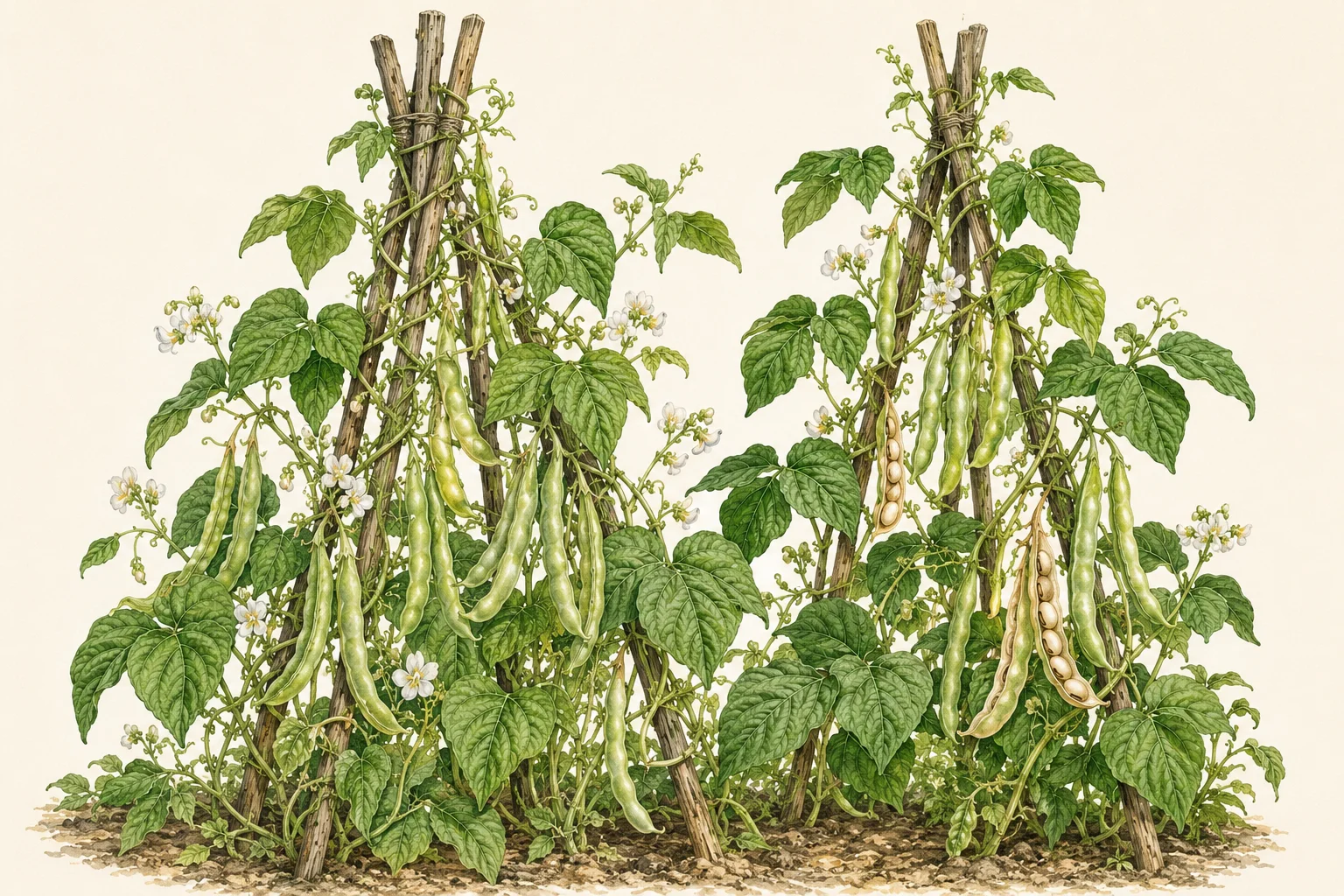
Botanical illustration of climbing shelling and dry beans growing over two wooden teepee trellises, with green pods, drying pods, white flowers and mature beans visible.

Pole Shelling / Dry Bean

Pole Shelling Bean / Dry Bean / Climbing Borlotti Bean

Phaseolus vulgaris

Crop overview

Crop group
Legume
Lifecycle
Annual
Growth habit
Annual Twining Vine Grown For Fresh Shell Beans Or Mature Dry Seed

This profile covers climbing cultivars of Phaseolus vulgaris grown primarily for fresh shell beans or fully mature dry beans. It includes pole borlotti or cranberry beans, white-seeded pole beans and other named climbing dry-bean cultivars. It does not cover bush dry beans, pole beans grown mainly for tender whole pods, lima or butter beans, scarlet runner beans, yardlong beans or other climbing bean species. Some multipurpose cultivars may also be eaten young, but they belong here when their main use is as shelling or dry beans. It does not cover bush dry beans, pole snap beans harvested mainly for tender whole pods, scarlet runner beans, lima beans or yardlong beans. Some dual-purpose cultivars can be eaten as snap, shelling or dry beans, but this profile focuses on the later shelling and dry-seed stages.

Variety examples

Cherokee Trail of Tears, Good Mother Stallard, Hidatsa Shield Figure, Borlotto Lingua di Fuoco (pole selection)

Quick facts

Plant spacing
15 cm – 30 cm
Row spacing
90 cm
Support height
1.80 m – 2.40 m
Support strength
Medium
Support types
String Trellis, Wire Trellis, Bean Teepee, Trellis Netting, Sturdy Fence, Garden Arch
Training method
Twining
Vertical suitability
Recommended
Sun requirement
Full Sun
Days to harvest
75–120 days

Support & training

Training requirements

Guide young vines onto poles, string, mesh or wire until they begin twining. Redirect shoots across unused support space and keep maturing pods accessible. The structure should allow good airflow and remain stable when vines and drying pods become heavy.

Pruning requirements

Routine pruning is unnecessary. Redirect tangled shoots and remove diseased or badly damaged growth. Avoid pinching productive vines merely to hasten maturity. Near the end of a short season, removing new flowers may help the plant focus on pods that are already filling, but this is optional.

Growing setup guidance

Container

Minimum size: 30 L

Plants per container: 2

Grow up to two plants in a stable container holding at least 30 L (about 8 US gal) of potting mix. A larger container gives more reliable moisture and seed filling. Provide a firmly anchored trellis and excellent drainage. Maintain consistent moisture through flowering and seed development, then reduce irrigation as pods mature and begin drying. Feed moderately and avoid excessive nitrogen.

Raised bed

Sow beside a completed trellis in fertile, well-drained soil. Keep moisture even during flowering and bean filling, while allowing good airflow so maturing pods can dry. Leave access to inspect pods and harvest them promptly before prolonged rain or frost.

In-ground

Direct sow into warm, freely draining soil beside a support. Rotate away from other beans where soil-borne disease has been troublesome. Maintain consistent moisture until beans are full-sized. As dry-bean pods mature, avoid unnecessary overhead watering and prolonged wetness that can stain seed or cause pod mould.

Planting, pollination & harvest

Sowing / transplanting

Direct sow after frost danger has passed when soil is at least about 16°C (60°F), with warmer soil producing faster emergence. Install the support at sowing time. Plant seed approximately 2.5–4 cm deep according to soil texture and packet instructions. Direct sowing is preferred because beans dislike root disturbance. Choose a cultivar whose dry-seed maturity fits the available frost-free season.

Pollination

Common beans are self-fertile and normally set pods without another variety or insect pollinators. Bees may visit the flowers and occasional crossing can occur. Seed savers should separate varieties where strict varietal purity matters. Very hot weather, drought or saturated soil can cause temporary flower drop.

Warnings

Common beans are frost-tender. Dry-bean cultivars need enough warm weather for seed to fill and pods to dry. Do not eat mature shelling or dry beans raw or undercooked. Common beans contain lectins that are reduced by proper cooking; red kidney and white kidney or cannellini types are particularly important food-safety concerns. Use reliable soaking and boiling instructions and do not rely on low-temperature slow cooking of raw dry beans. Plain home-canned beans are low-acid foods and require tested pressure-canning instructions. Watch for aphids, bean beetles, caterpillars, mites, root rots, anthracnose, rust, bacterial blights and viruses.

General notes

For fresh shell beans, harvest when pods have become thin and fibrous and the seeds are full-sized but still soft and moist. Shell and cook them promptly or refrigerate. For dry beans, wait until pods and seeds are fully dry and the beans rattle. If wet weather or frost threatens, cut mature vines or pods and finish drying them under cover. Shell only when the beans are thoroughly dry, then store in a cool, dark and dry place. Inspect stored seed for moisture, mould and insect damage. Cook all mature beans thoroughly before eating.

Climate guidance

Climate suitability: Recommended

Planting season

Plant in late spring after frost danger. Ensure the chosen cultivar can dry before autumn frost.

Wet / dry season

Water consistently during flowering and seed filling, then reduce irrigation as pods dry.

Soil temperature

Direct sow once soil is at least about 16°C (60°F).

Frost sensitivity

Frost-tender. Harvest mature pods before autumn frost.

Heat sensitivity

Extreme heat can temporarily reduce pod set, but pole beans may resume production when weather moderates.

Humidity / disease

Hot rainy weather increases rust, blight and anthracnose pressure.

Sowing guidance

Direct sow beside the support. A second sowing is only suitable where the remaining season is long enough for dry seed.

Notes

Drying pods need airflow and protection from prolonged late-season rain.

Ready to plan?

Open the planner with Pole Shelling / Dry Bean preselected.