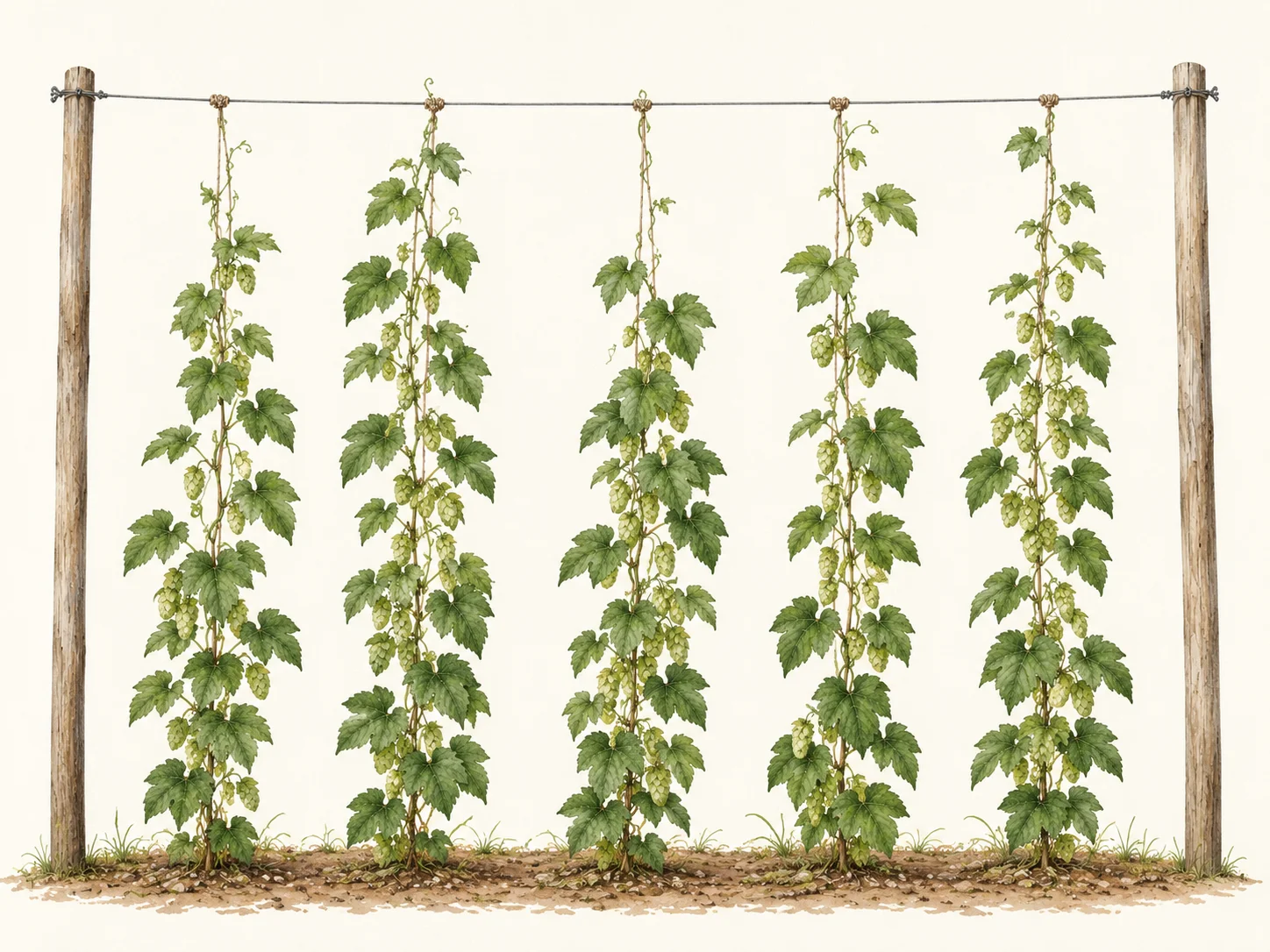
Hops
Hops / Hop Bine
Humulus lupulus
Crop overview
- Crop group
- Perennial Cone Crop
- Lifecycle
- Perennial
- Growth habit
- Fast-Growing Herbaceous Perennial Bine That Dies To The Ground In Winter And Regrows From A Crown Each Spring
Covers female hop plants grown vertically for cones, home brewing, herbal use or seasonal shade.
Variety examples
Cascade, Centennial, Chinook, Goldings, Hallertau, Saaz
Quick facts
- Plant spacing
- 60 cm – 90 cm
- Row spacing
- 2.50 m
- Support height
- 4.20 m – 6 m
- Support strength
- Heavy
- Support types
- Tall Overhead Wire Trellis, Strong Vertical Ropes, High Pergola, Very Tall Sturdy Fence
- Training method
- Twining
- Vertical suitability
- Recommended
- Sun requirement
- Full Sun
- Days to harvest
- 120–180 days
Support & training
Training requirements
Train several strong bines clockwise around each support string once shoots are long enough. Remove excess shoots and keep the lower canopy open.
Pruning requirements
Cut all top growth to ground level after harvest or dormancy. Remove weak spring shoots and manage spreading rhizomes.
Growing setup guidance
Container
Minimum size: 75 L
Plants per container: 1
Use a very large container, vigorous feeding and watering, and a tall removable support. Divide or root-prune as the crown expands.
Raised bed
Plant at the base of a very tall trellis. Prevent spreading rhizomes from taking over nearby bed space.
In-ground
Plant in rich, well-drained soil with ample moisture and a support installed before vigorous spring growth begins.
Planting, pollination & harvest
Sowing / transplanting
Plant dormant rhizomes or potted crowns after severe frost risk. Named female cultivars are used for cone production; seed-grown plants are variable and may be male.
Pollination
Female plants produce useful cones without a male. Male plants are generally excluded from brewing plantings because seeded cones are not desired.
Warnings
Hops need far more height than an ordinary vegetable trellis. The crown spreads underground, foliage can irritate skin, and dogs should not ingest spent hops.
General notes
A home trellis around 4.2-4.6 m can work, though commercial systems are often taller. Cone yield and aroma depend strongly on cultivar, day length and climate.
Climate guidance
Climate suitability: Recommended
Planting season
Plant in early spring
Northern hemisphere months
Mar-Apr
Southern hemisphere months
Sep-Oct
Wet / dry season
Irrigate deeply through hot weather
Soil temperature
Plant when soil begins warming and can be worked
Frost sensitivity
Young shoots can be frost damaged
Heat sensitivity
Sustained extreme heat can reduce cone quality
Humidity / disease
Mildews and spider mites need monitoring
Sowing guidance
Choose cultivars proven in the local growing region
Notes
A strong fit where winter dormancy and long summer days are present.