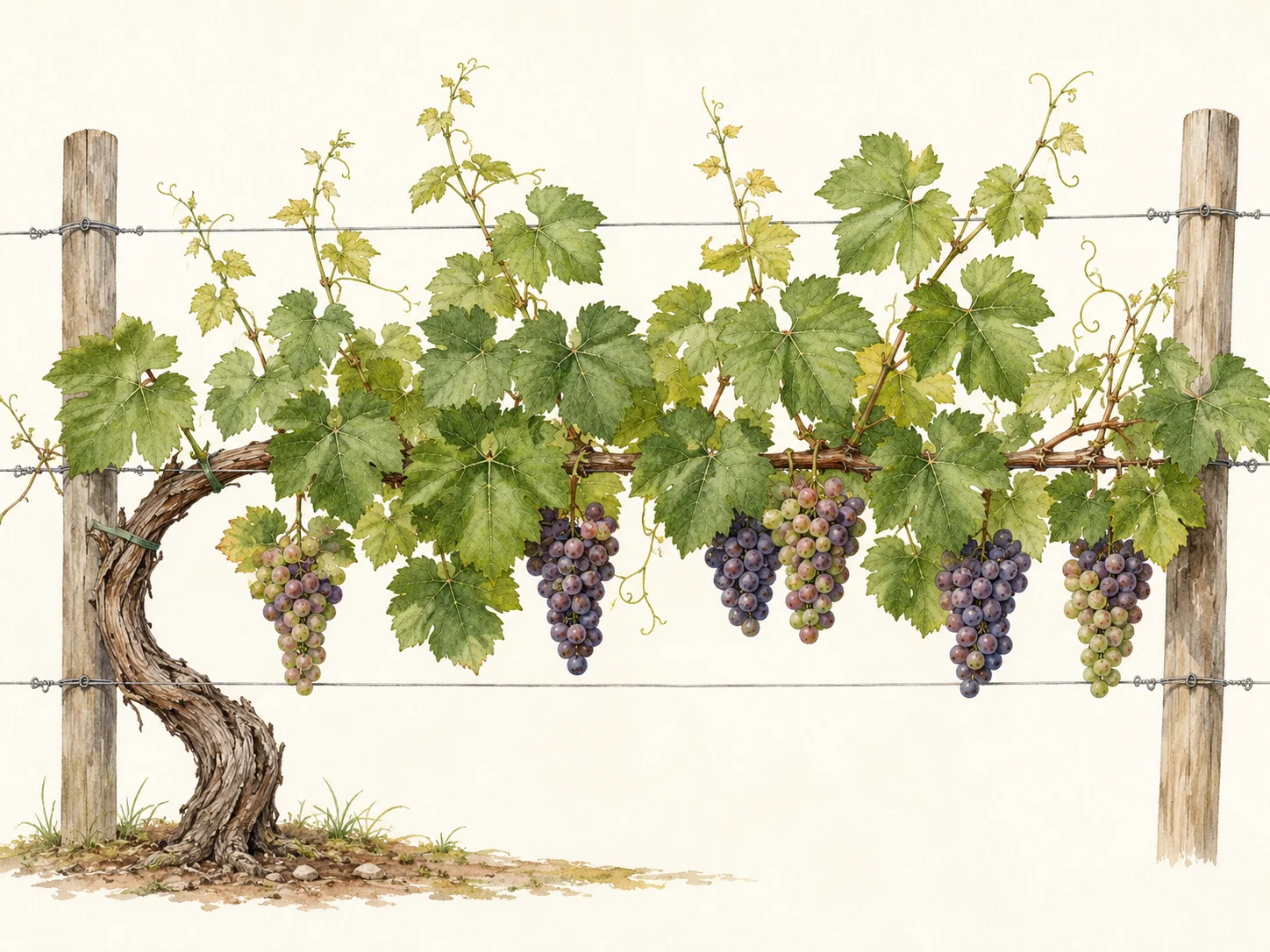
Grapevine
Grapevine / Grape
Vitis spp.
Crop overview
- Crop group
- Perennial Fruit Vine
- Lifecycle
- Perennial
- Growth habit
- Vigorous Woody Perennial Vine That Climbs By Tendrils And Is Trained To Permanent Trunks, Cordons Or Canes
General profile for table, juice and wine grapes grown on a trellis, fence, arbor or pergola. Cultivar choice strongly affects vigour, cold hardiness, heat tolerance, disease resistance and harvest season.
Variety examples
Table grapes, Wine grapes, Juice grapes, Muscadine grapes, Cold-hardy grapes
Quick facts
- Plant spacing
- 1.80 m – 2.40 m
- Row spacing
- 2.70 m
- Support height
- 1.20 m – 2.10 m
- Support strength
- Heavy
- Support types
- Strong Wire Trellis, Sturdy Fence, Arbor, Pergola
- Training method
- Tendril
- Vertical suitability
- Recommended
- Sun requirement
- Full Sun
Support & training
Training requirements
Develop one or two trunks, then train permanent cordons or annual canes along the trellis. Tie young growth as required and keep the fruiting zone open to light and air.
Pruning requirements
Prune every dormant season. Grapes fruit on current-season shoots arising from retained one-year-old wood, so the pruning method must match the cultivar and training system.
Growing setup guidance
Container
Minimum size: 75 L
Plants per container: 1
Use a very large container, a permanent support and a cultivar suited to restricted roots. Container vines need closer attention to water, feeding and root-zone temperature.
Raised bed
Best in a large, deep bed with the trellis installed before planting. Allow room for a permanent trunk and annual access for pruning.
In-ground
Plant beside a permanent, well-braced trellis in full sun and freely draining soil. Mature vines are long-lived and should not share a lightly built annual-crop support.
Planting, pollination & harvest
Sowing / transplanting
Plant dormant bare-root vines while dormant where appropriate, or plant container-grown vines when soil is workable and severe frost risk has passed. Match the cultivar and rootstock to the local climate and soil.
Pollination
Many cultivated grapes are self-fertile, but some species and cultivars need a compatible polliniser. Check the cultivar before relying on a single vine.
Warnings
A mature vine and crop are heavy. Use braced end posts and strong wire. Humid climates can create severe fungal disease pressure unless resistant cultivars and good canopy management are used.
General notes
Cultivar choice is more important than the generic profile for cold tolerance, chill needs, heat tolerance, disease resistance and harvest season.
Climate guidance
Climate suitability: Recommended
Planting season
Plant while dormant in late winter or early spring
Northern hemisphere months
Feb-Apr
Southern hemisphere months
Aug-Oct
Wet / dry season
Provide water during establishment and prolonged drought
Soil temperature
Dormant vines can be planted before warm-season growth begins
Frost sensitivity
Spring frost can damage new shoots even when dormant wood is hardy
Heat sensitivity
Provide reliable water during prolonged heat and fruit ripening
Humidity / disease
Summer humidity increases mildew and rot pressure
Sowing guidance
Choose a cultivar rated for both local winter minimums and summer heat
Notes
A strong fit where the cultivar receives enough season length.