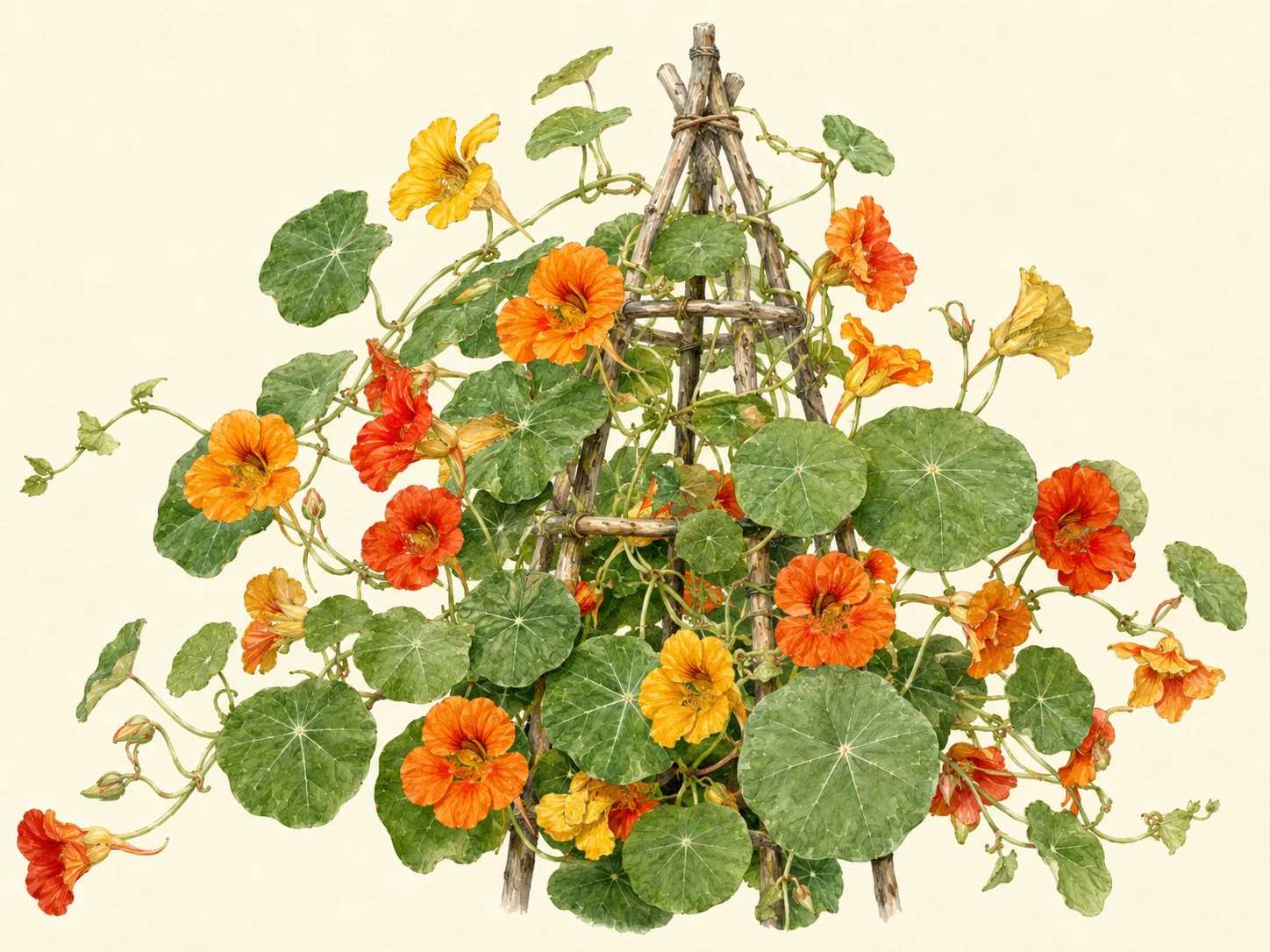
Climbing Nasturtium
Climbing Nasturtium / Garden Nasturtium
Tropaeolum majus
Crop overview
- Crop group
- Edible Flowering Climber
- Lifecycle
- Annual
- Growth habit
- Fast-Growing Annual With Long Scrambling Or Climbing Stems, Round Peltate Leaves And Edible Flowers
Covers climbing and trailing forms of common garden nasturtium trained vertically. Dwarf bush forms are outside this profile.
Variety examples
Tall Single Mix, Climbing mixed colours, Jewel of Africa
Quick facts
- Plant spacing
- 25 cm – 45 cm
- Row spacing
- 60 cm
- Support height
- 1.20 m – 2.40 m
- Support strength
- Light
- Support types
- Trellis Netting, Wire Fence, Garden Arch, Bamboo Trellis, String Trellis
- Training method
- Sprawling Trained Up
- Vertical suitability
- Recommended
- Sun requirement
- Full Sun
- Days to harvest
- 50–80 days
Support & training
Training requirements
Guide long stems onto a trellis or fence and loosely tie wandering growth where needed.
Pruning requirements
Trim overlong or damaged stems to keep the plant within its support. Deadheading prolongs flowering if seed is not wanted.
Growing setup guidance
Container
Minimum size: 20 L
Plants per container: 1
Use a medium to large pot with a light trellis. Avoid rich, heavily fertilised potting mixes, which can produce excessive foliage at the expense of flowers.
Raised bed
Plant at the trellis edge in well-drained, only moderately fertile soil. Rich soil encourages leaves rather than flowers.
In-ground
Grow in full sun in cool climates and give some afternoon protection in very hot summers. Train climbing stems onto a fence or trellis.
Planting, pollination & harvest
Sowing / transplanting
Direct sow near the last spring frost date, or start in pots 4-6 weeks earlier where the season is short. Seedlings dislike excessive root disturbance.
Pollination
Flowers attract pollinators. Pollination is only required if saving seed or using immature seed pods.
Warnings
Very rich soil can produce lush foliage with fewer flowers. In hot climates plants may decline during prolonged summer heat.
General notes
Leaves, buds, flowers and young seed pods are edible and peppery. This profile is for long climbing types rather than compact bedding nasturtiums.
Climate guidance
Climate suitability: Recommended
Planting season
Sow in spring after frost, or again for autumn in very hot areas
Northern hemisphere months
Mar-May
Southern hemisphere months
Sep-Nov
Wet / dry season
Water through dry spells but avoid lush overfeeding.
Soil temperature
Moderately warm spring soil is suitable.
Frost sensitivity
Frost tender.
Heat sensitivity
Prolonged intense summer heat can stop flowering and weaken plants.
Humidity / disease
Aphids and mildew can increase on stressed growth.
Sowing guidance
Use spring and autumn windows where midsummer is severe.
Notes
Best outside the hottest part of summer.