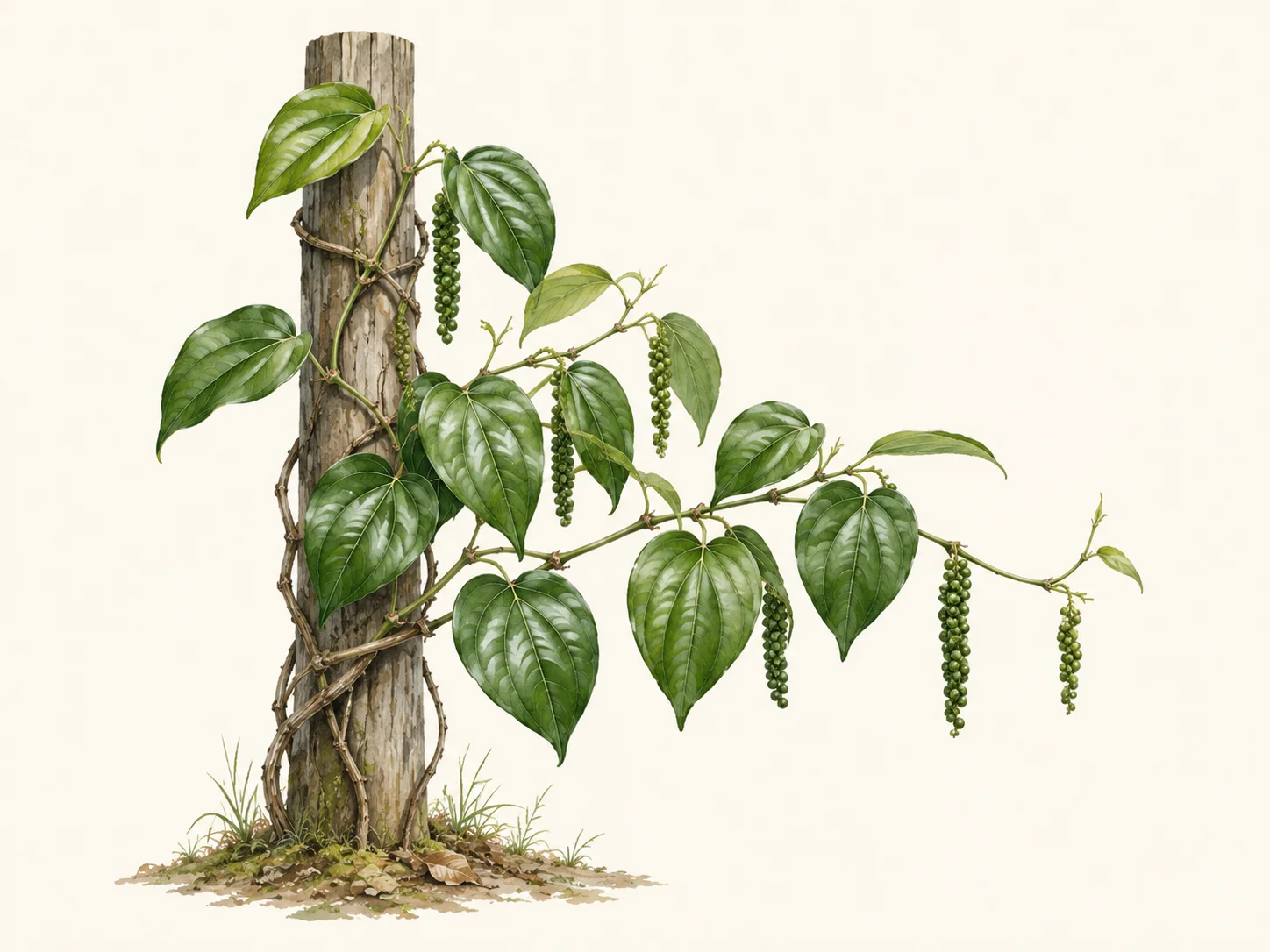
Black Pepper / Peppercorn Vine
Piper nigrum
Crop overview
- Crop group
- Perennial Spice Vine
- Lifecycle
- Perennial
- Growth habit
- Evergreen Woody Climbing Vine That Attaches To A Tree, Pole Or Rough Trellis By Short Aerial Roots
Covers true black pepper grown for green, black or white peppercorns. It is unrelated to chilli and capsicum peppers.
Variety examples
Panniyur types, Karimunda, Kottanadan, Locally selected pepper vines
Quick facts
- Plant spacing
- 2 m – 3 m
- Row spacing
- 3 m
- Support height
- 2 m – 4 m
- Support strength
- Heavy
- Support types
- Living Tutor Tree, Rough Hardwood Post, Concrete Standard, Sturdy Shaded Trellis
- Training method
- Tying
- Vertical suitability
- Recommended
- Sun requirement
- Partial Shade
Support & training
Training requirements
Tie young upright shoots to the standard until aerial roots attach. Keep the support canopy pruned so the vine receives filtered light and air.
Pruning requirements
Remove weak, diseased and ground-trailing growth. Regulate shade and keep the base mulched but not waterlogged.
Growing setup guidance
Container
Minimum size: 75 L
Plants per container: 1
Use a large container with porous, organic, free-draining mix, partial shade and a rough support. Container bush-pepper forms are managed differently from full climbing vines.
Raised bed
Use a deep, very well-drained bed under filtered light with a permanent support. Mound the planting position in districts with intense wet seasons.
In-ground
Plant beside a living or dead standard in light, porous soil rich in organic matter. Even brief waterlogging can injure the roots.
Planting, pollination & harvest
Sowing / transplanting
Plant healthy rooted cuttings at the onset of reliable warm weather or rain. Train young shoots to a support and provide temporary shade until established.
Pollination
Cultivated vines generally set berries without a separate polliniser, but weather during flowering strongly affects set.
Warnings
True black pepper needs warm humid conditions but is highly intolerant of waterlogging. Foot rot caused by Phytophthora is a major disease in wet soils.
General notes
Green peppercorns, black pepper and white pepper are produced from the same fruit at different harvest and processing stages.
Climate guidance
Climate suitability: Not recommended
Planting season
Not suitable outdoors
Wet / dry season
Greenhouse drainage and humidity management are essential
Soil temperature
Winter root-zone warmth is essential
Frost sensitivity
Winter cold is lethal or severely damaging
Heat sensitivity
Summer heat may be acceptable but the annual climate is unsuitable
Humidity / disease
Greenhouse drainage and airflow remain essential
Sowing guidance
Use protected heated culture only
Notes
The cold winter excludes normal outdoor production.